
Manitoba has announced updates to its regulations concerning asbestos handling to safeguard workers against exposure to the hazardous material, which is the primary cause of work-related fatalities in the province, according to government officials.
Labour and Immigration Minister Malaya Marcelino emphasized the necessity for stronger and clearer guidelines to ensure worker safety. The focus is on prevention to guarantee that individuals involved in building maintenance can return safely to their families, she stated during a press briefing on Thursday.
Under the revised regulations, individuals working with asbestos will be required to undergo training and certification. Employers utilizing asbestos must register with the provincial authorities, and building owners will have increased responsibilities to ensure worker safety, the province has outlined.
The government has set a deadline of June 2027 for workers to either pass an examination conducted by the Workers Compensation Board of Manitoba on safe asbestos handling or undergo training and certification, Minister Marcelino announced.
The cost of training per worker may vary between $150 and $950, as estimated by the minister, based on a model similar to that of British Columbia, which mandates specialized training for asbestos abatement activities in buildings.
Furthermore, companies with employees handling asbestos must complete registration with the province by June 2027; otherwise, they will not be authorized to work with the material.
Asbestos was commonly used in various construction materials such as roofing products and insulation across Canada for many years. Although the substance was not fully prohibited in Canada until 2018, its use had significantly declined by around 1990.
During building demolition and construction, microscopic asbestos fibers can be released into the air and inhaled, leading to severe health issues, including cancer.
‘New rules will save lives’
An average of about six Manitobans succumb annually to diseases like mesothelioma and lung scarring caused by asbestos exposure, as cited by Kevin Rebeck, the president of the Manitoba Federation of Labour (MFL).
Rebeck highlighted the inadequacy of Manitoba’s previous regulations on asbestos handling despite the well-known risks associated with exposure to the material. While there were general workplace safety regulations in place, standardized mandatory training for asbestos handling was lacking and left at the discretion of employers.
He pointed out discrepancies in how different companies trained their workers, with some providing adequate protection measures while others were found lacking, particularly in the provision of specialized equipment.
With an increasing number of aging buildings requiring maintenance or demolition, Rebeck warned that more workers could potentially be exposed to asbestos in the near future without stringent regulations in place.
The MFL pushed for stronger regulations governing asbestos handling to prevent a potential surge in asbestos-related deaths in Manitoba, emphasizing the critical importance of worker protection.
“These new regulations will undoubtedly save lives,” Rebeck affirmed.
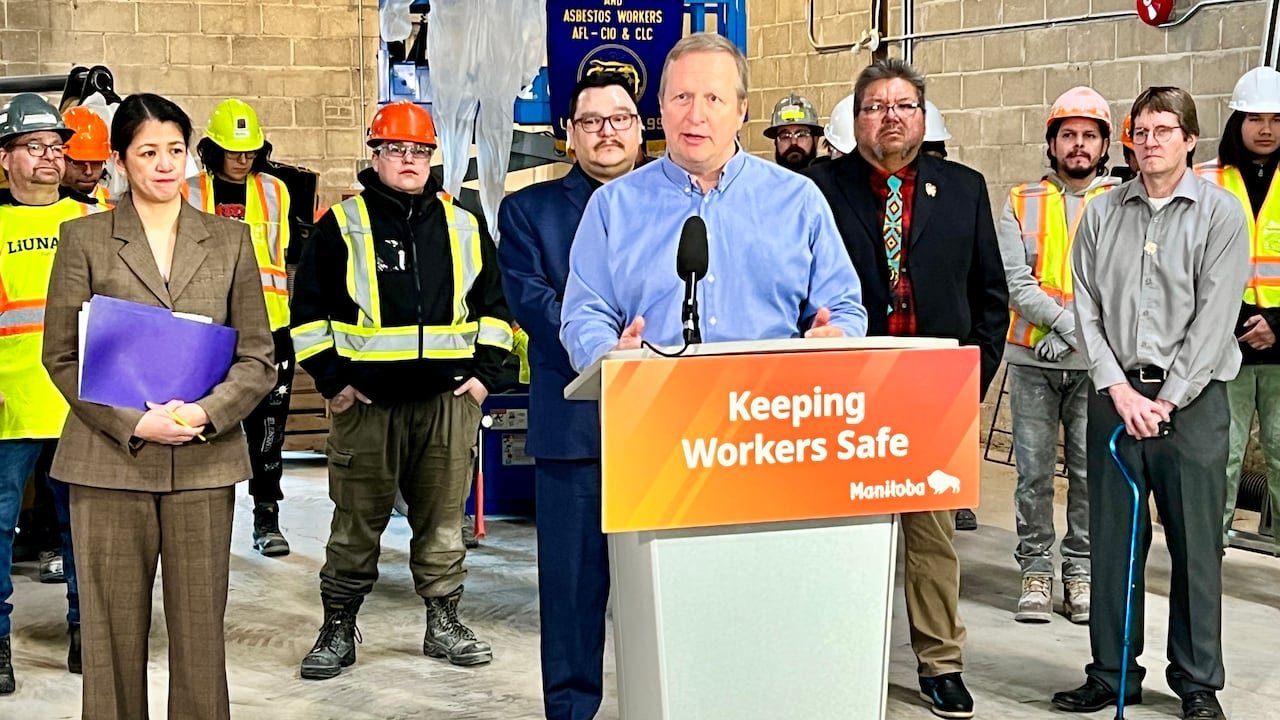
These regulations are also vital for preventing asbestos exposure among building occupants.
Jeremy Carslon, president and training coordinator of Insulators Local 99, the union representing heat and frost insulators in Manitoba, highlighted the risks associated with friable asbestos, a form that can easily release airborne particles through hand pressure if not adequately contained.
He expressed satisfaction with the forthcoming stricter regulations, as the current lack of oversight makes it challenging to monitor asbestos handling practices in Manitoba and ensure compliance with safety protocols.

