
Armed with insect nets, sample vials, and a cooler designed to regulate temperature, Nature NB is exploring Fredericton this summer to study a crucial yet often overlooked resident: the native bumblebee.
This conservation organization is initiating its inaugural season of field surveys aimed at tracking bumblebee species in the city.
The initiative, created by the Mi’kmaq-led Unama’ki Institute of Natural Resources in Cape Breton, seeks to compile a detailed map of bumblebee populations and their habitats throughout New Brunswick and the wider Maritimes region.
“No one has consistently surveyed these locations before,” stated Francie Morgan, the program coordinator for Nature NB spearheading this project. “Therefore, we lack any baseline data to assess the condition of our bumblebee populations in the future.”
“Our goal is to establish a foundation for conservation initiatives, allowing us to make informed decisions regarding habitat protection.”
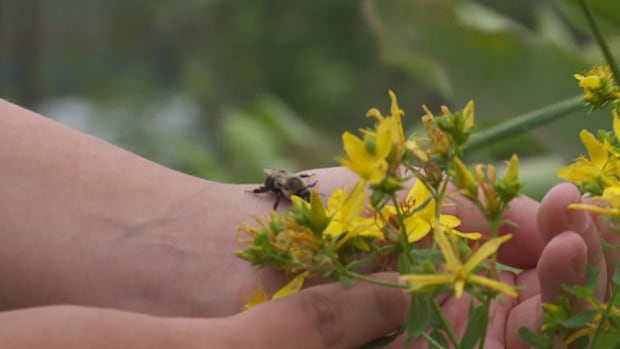
As New Brunswick works to safeguard endangered bumblebee species, Nature NB’s field surveys emphasize that preserving local pollinators begins with foundational data.
A key aspect of her work is assisting landowners and community partners in making better-informed choices to safeguard pollinators.
Nature NB is collaborating on an expanding provincial mapping project along with the Amlamgog (Fort Folly) Habitat Recovery team, which originally introduced the survey to New Brunswick, as well as EOS Eco-Energy and the Pays de Cocagne Sustainable Development Group.
Survey efforts
This summer, Morgan and her team are surveying three locations in three neighborhoods on the north side of Fredericton.
They identify individual species on-site by analyzing specific color patterns and shapes on the bee’s abdomen and thorax.
Although it is still early in the season, Morgan recorded six distinct species during the initial survey in June. The province recognizes 18 different bumblebee species in New Brunswick.
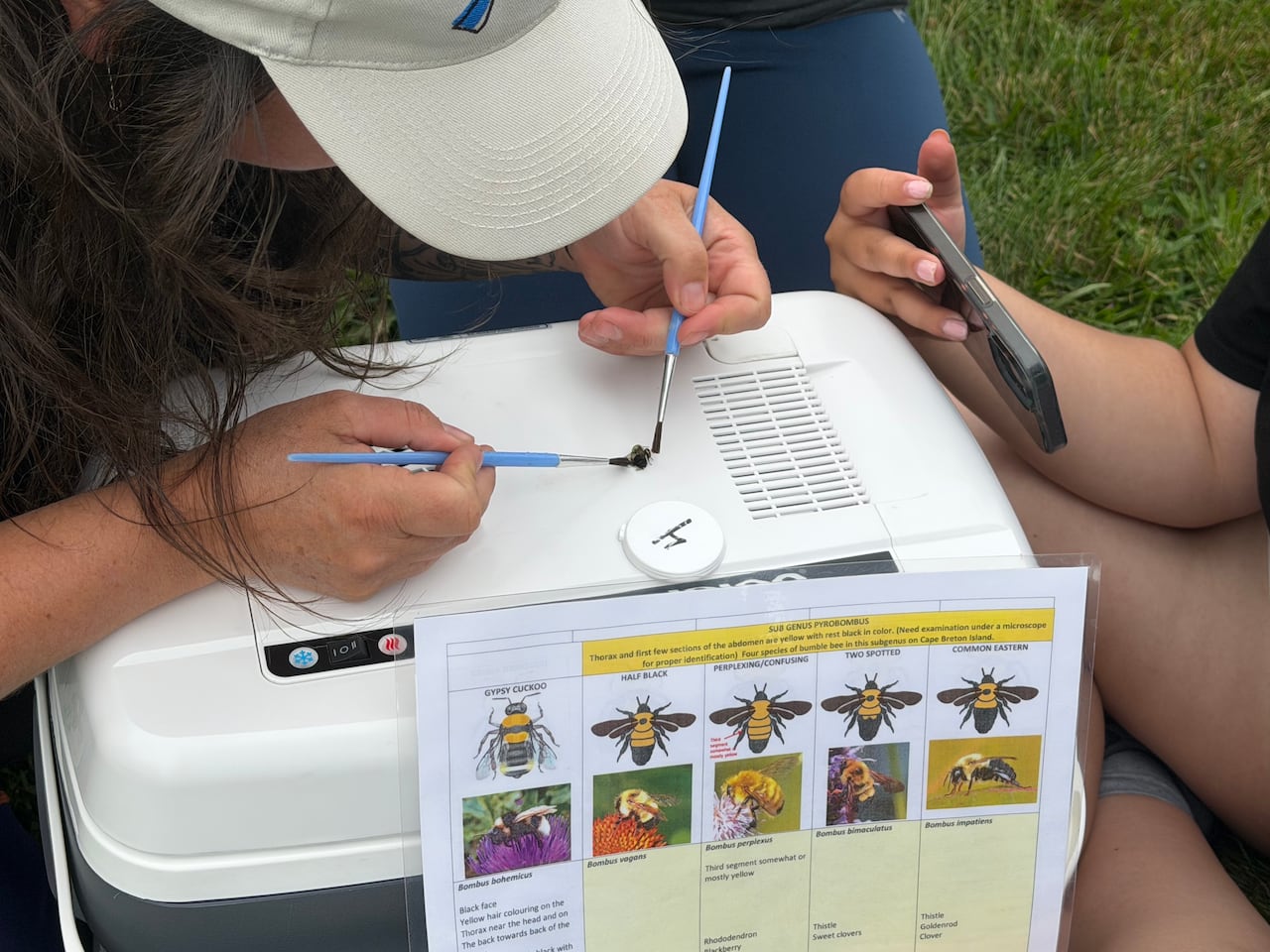
Francie Morgan, program co-ordinator at Nature NB, places the bumblebee into a state of torpor, allowing her to use paintbrushes to carefully reposition the bee for photographs. (Olivia Zhong/CBC)
The data gathered is shared with the Unama’ki Institute, the Atlantic Canada Conservation Data Centre, and iNaturalist, a global open-source database utilized by researchers worldwide.
“Someone in Ontario could leverage that information to enhance their own research and conservation efforts,” Morgan explained.
“This is particularly vital for migratory species, such as monarchs, but equally significant for bumblebees, as it helps us identify which areas in our city are effectively supporting pollinators.”
Morgan noted that protecting one species often leads to the protection of others.
“By ensuring the habitat for bumblebees is safeguarded, we also protect the environment for wasps, monarchs, and hummingbirds, which in turn benefits all creatures that rely on them for sustenance,” she stated.
“The decisions we make regarding land conservation have a cascading effect throughout the ecosystem.”
Nature NB’s initiative is timely. The New Brunswick government has recently unveiled a draft recovery strategy for two at-risk local bumblebee species: the Bohemian cuckoo bumblebee and the yellow-banded bumblebee.
The Bohemian cuckoo bumblebee, which was thought to be extinct from 1980 to 2010, was rediscovered in northern New Brunswick in 2021.
The recovery strategy now advocates for a standardized monitoring system throughout the province.
“The transition from believing we had no presence of these bees in the province to now having a few observations indicates that our understanding of their distribution is still lacking,” remarked Shaylyn Wallace, species-at-risk manager at the Department of Natural Resources.
Gathering more location data about bees will facilitate conservation efforts, she added.
“We absolutely require assistance from researchers and non-profit organizations to help us bridge these knowledge gaps.”
Native bumblebees serve a critical ecological function in maintaining the stability, resilience, and balance of surrounding ecosystems.

Shaylyn Wallace, species-at-risk manager at the Department of Natural Resources, emphasized the need for greater awareness regarding the significance of bumblebees in conservation efforts. (Olivia Zhong/CBC)
“Native bumblebees are essential for supporting native flora, and this diversity of plants fosters resilience and a sustainable ecosystem amid challenges like climate change and severe weather.”
For local community members eager to assist wild pollinators, Morgan suggests that the most impactful actions begin right at home by allowing garden spaces to grow wild.
“If everyone in a neighborhood decided to refrain from mowing just 50 square feet of their yard, or even a smaller area, such as five square feet, those plants would collectively create a foraging habitat for bumblebees in partnership with other patches of native plants.”

