
The Trump administration has discreetly directed federal prosecutors in Miami to refrain from conducting criminal probes into Venezuela’s acting President Delcy Rodríguez, who has long been a focus for the U.S. Drug Enforcement Administration, as reported by current and former U.S. law enforcement officials. This development indicates a potential thaw in relations between the White House and the oil-rich nation.
It remains unclear if prosecutors had implicated Rodríguez in any wrongdoing or if an indictment was forthcoming. A spokesperson from the U.S. Justice Department stated in an email that “there was never an investigation into her to shut down.”
However, DEA documentation acquired by The Associated Press earlier this year indicates that she has been on the radar of federal law enforcement since at least 2018, despite not facing criminal charges in the U.S., unlike many other senior Venezuelan officials.
The instruction to pause investigations into Rodríguez was reportedly aimed at not jeopardizing the administration’s attempts to stabilize Venezuela following the capture of her predecessor, Nicolás Maduro, among other considerations, according to the official.
It is not clear whether the White House, which redirected inquiries to the Justice Department, played a role in this decision.
“Everyone has been told to stand down,” remarked one former official.
The current and former officials, who discussed the matter with The Associated Press on the condition of anonymity due to not being authorized to speak publicly about internal discussions, provided insights into this development.
Rodríguez, along with a U.S. attorney representing her and the Venezuelan Communications Ministry, did not respond to requests for comments.
Reducing pressure on Rodríguez
By temporarily alleviating the threat of an indictment, the Trump administration reduces pressure on Rodríguez as it seeks to collaborate with the acting leader to stabilize Venezuela post-Maduro and attract U.S. investment.
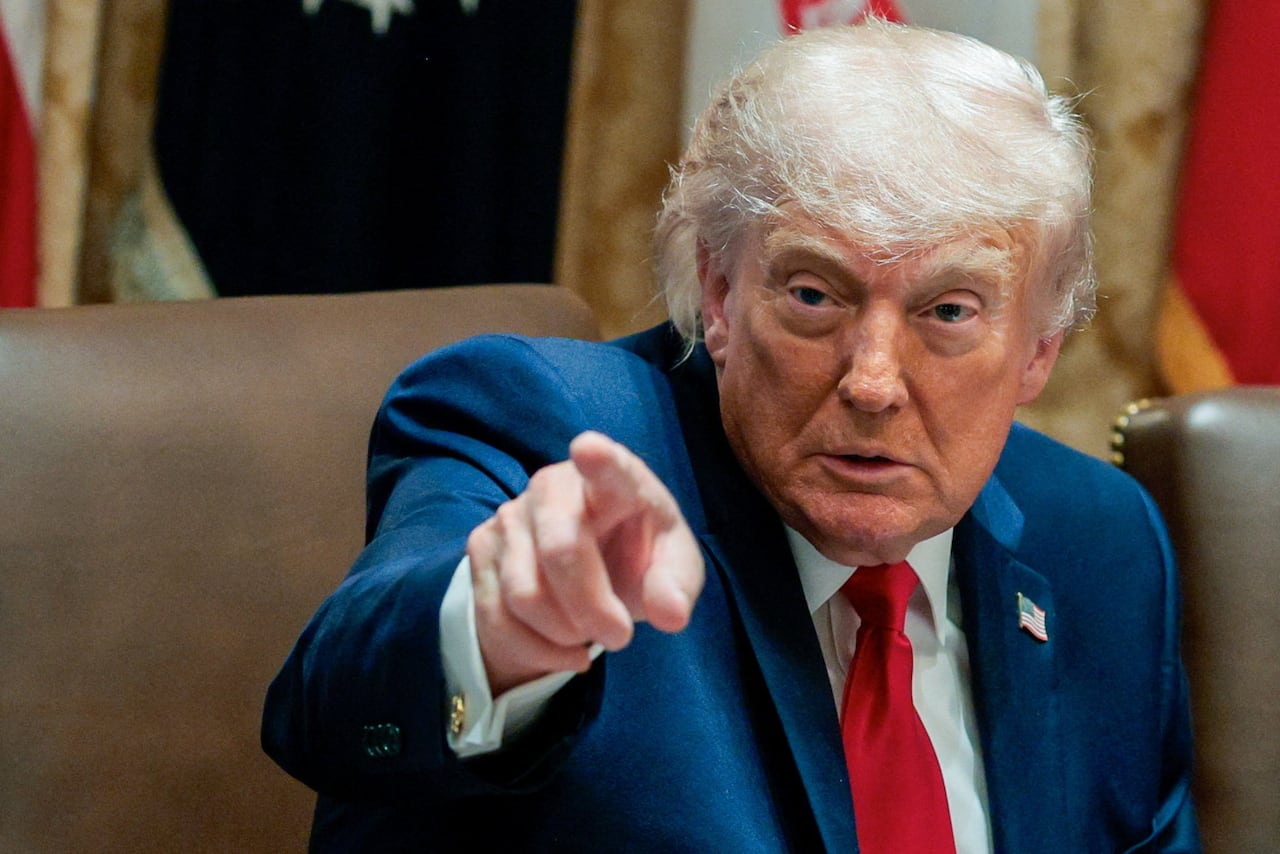
U.S. President Donald Trump, seen pointing a finger during a cabinet meeting on Wednesday, has praised Rodríguez as a ‘terrific person.’ (Evan Vucci/Reuters)
Shortly after the U.S. military transported Maduro and his wife to New York to face federal narcotics charges, both of whom have pleaded not guilty, President Trump referred to Rodríguez as a “terrific person.”
In recent months, the U.S. has lifted sanctions against Rodríguez and acknowledged her as the sole head of state of Venezuela, enabling her to reconnect with western banks and facilitate interactions with U.S. investors interested in exploiting the world’s largest petroleum reserves.
As the relationship between the two governments has grown closer, some observers have suggested the Venezuelan strategy—marked by oil blockades, indictments of top officials, and military intervention threats—could serve as a model for encouraging regime change in other nations, including Iran and Cuba.
Rodríguez and her brother, Jorge Rodríguez, who leads the National Assembly, were sanctioned by the U.S. during Trump’s first term due to their roles in undermining democracy in Venezuela and supporting Maduro’s authoritarian regime.
In early March, Trump praised Rodríguez on social media, stating, “She is doing a great job. The Oil is beginning to flow, and the professionalism and dedication between both Countries is a very nice thing to see!”
Recently, Rodríguez has conducted ceremonies featuring a consistent influx of American oil executives, some of whom have participated in prominent delegations led by U.S. Energy Secretary Chris Wright and Secretary of the Interior Doug Burgum.
Election discussions postponed
Amidst all the mutual praise, there has been no mention of elections in Venezuela, even though Rodríguez exceeded a 90-day limit set by Venezuela’s high court to temporarily fill Maduro’s role last month.
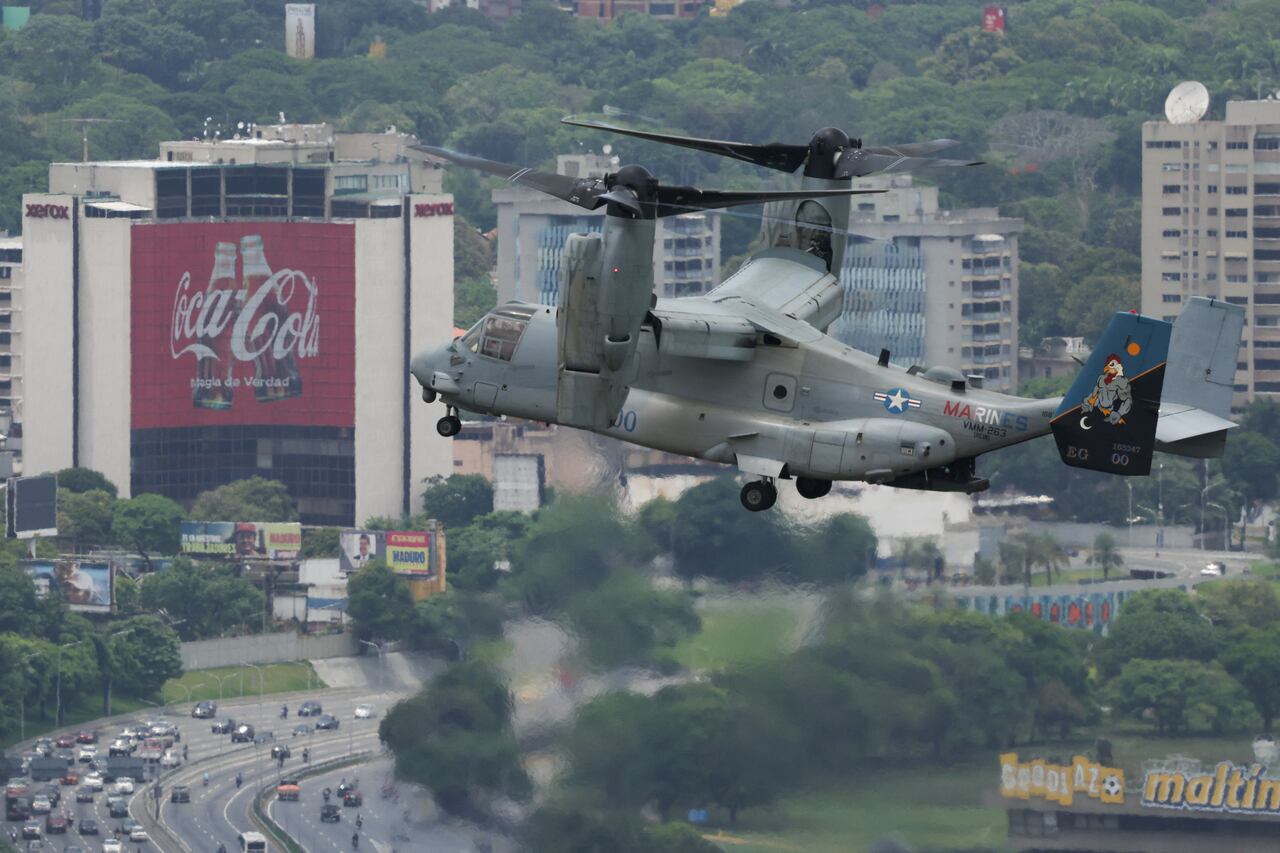
A U.S. Marine Corps aircraft approaches the U.S. embassy during a military exercise in Caracas last Saturday. (Leonardo Fernandez Viloria/Reuters)
When a U.S. journalist posed a question about her timeline for elections earlier this month, Rodríguez responded in English, “I don’t know. Some time.”
U.S. Senator Jeanne Shaheen from New Hampshire, the leading Democrat on the Senate Foreign Relations Committee, has called on the administration to clarify its lenient stance toward Rodríguez, labeling her as a “central figure in Nicolás Maduro’s repressive regime.”
“Sanctions have been lifted on Ms. Rodríguez without any indication that she has taken concrete and meaningful actions to restore democratic order,” Shaheen, joined by Senator Elizabeth Warren of Massachusetts, stated in a letter to U.S. Secretary of State Marco Rubio and U.S. Secretary of Treasury Scott Bessent last week.
Rick de la Torre, a former CIA chief of station in Caracas, noted that the decision to cease any criminal investigations into Rodríguez aligns well with the foreign policy objectives of the Trump administration in Venezuela.
“She has been a lifelong Marxist and a senior leader of one of the most corrupt regimes globally, but the U.S. is offering her breathing space and incentives to create a foundation for democracy and U.S. investment,” explained de la Torre, now the CEO of Tower Strategy, which consults for companies looking to operate in Venezuela.
“However, there is a limited time frame for her usefulness. Eventually, she will have to face justice,” he added.
Under DEA scrutiny
The DEA has compiled an extensive intelligence dossier on Rodríguez that dates back to at least 2018, receiving allegations against her regarding drug trafficking and gold smuggling, as reported by the AP earlier this year. One confidential informant informed the DEA in early 2021 that Rodríguez was allegedly utilizing hotels in the Caribbean resort of Isla Margarita as a front for money laundering, according to the records.
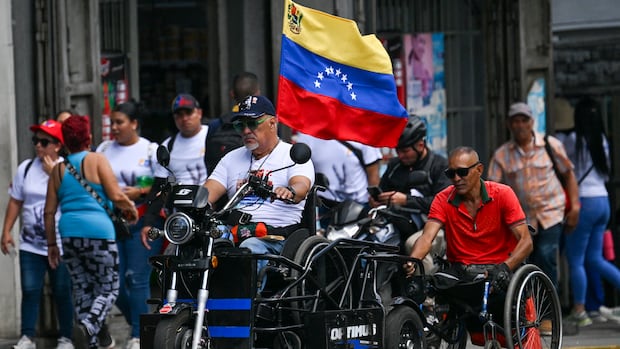
U.S. President Donald Trump posted a map graphic on his Truth Social platform Tuesday depicting Venezuela with an inset American flag and the label ’51st State.’ Antonio Matheus Suárez, journalist for the Caracas Chronicles, says Venezuelans don’t believe Trump’s recent comments about acquiring Venezuela pose a ‘serious threat.’
Rodríguez’s name has come up in numerous DEA investigations—some of which were still active as of this year—spanning field offices from Paraguay and Ecuador to Phoenix and New York. She has also been connected to Maduro’s alleged financial intermediary, Alex Saab, who U.S. authorities arrested in 2020 on money laundering charges, according to the records.
Recently, Rodríguez expelled Saab as part of a crackdown on insider businessmen accused of profiting through corrupt interactions with Maduro.
It is unclear in which Miami investigations Rodríguez’s name has appeared. Two former officials indicated that she has also been mentioned in discussions with investigators in Tampa, who were tasked last year by Pam Bondi, the former U.S. attorney general, to investigate financial crimes in Venezuela.
At that time, Rodríguez was serving as Maduro’s vice president. U.S. Justice Department policy mandates that the attorney general must personally authorize the prosecution of any foreign head of state, who typically enjoy immunity from legal action under international and U.S. regulations.

