

In a rare occurrence within the medical system, Stephanie Azzarello found herself in a situation where she had to seek her own cure back in 2023. Diagnosed with primary sclerosing cholangitis, a rare chronic liver disease causing harm to the bile ducts and liver, Azzarello faced the urgent need for a liver transplant to survive.
Ten years post-diagnosis, the damage to her liver was severe, prompting her placement on the waiting list for a deceased donor liver. However, the likelihood of receiving an organ through this route was minimal. Consequently, she embarked on a public search for a living donor willing to undergo the extensive surgery of donating a portion of their liver to her after no matches were found among her family and friends.
Reflecting on the daunting experience, Azzarello, now 41, remarked, “I am not seeking directions; I am in need of a vital organ. It was a terrifying situation, but I had no choice as my life hung in the balance on that list.”
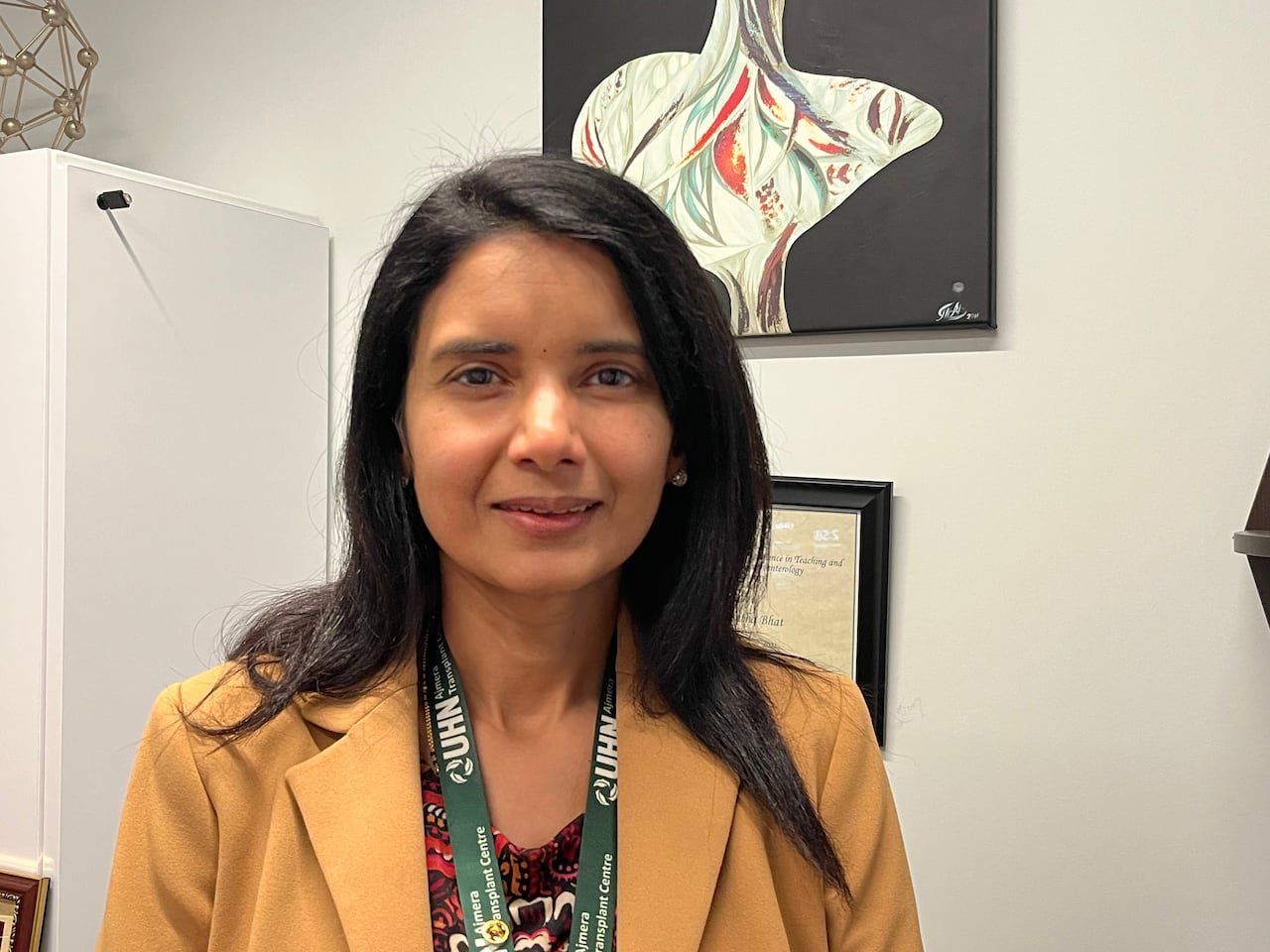
At the forefront of changing the system that places individuals like Azzarello in such predicaments is Dr. Mamatha Bhat, a clinician scientist at the University Health Network Ajmera Transplant Centre in Toronto, the largest transplant facility in North America.
Currently, patient prioritization is determined by the Model for End Stage Liver Disease (MELD) score, which utilizes specific blood test outcomes to assess the urgency of liver transplant needs. Recognizing the inherent biases against women and individuals with rare conditions such as PSC within the MELD model, Dr. Bhat sought to address these disparities.
For instance, the MELD score does not consider that females naturally have lower creatinine levels due to lesser muscle mass, a key indicator of liver dysfunction. Moreover, men are more prone to sudden fatal incidents leading to organ donations, and certain male liver attributes may not align well with smaller female bodies.
“Each patient is unique,” Dr. Bhat emphasized, highlighting the limitations of the linear statistical MELD model in capturing the complexity of individual cases.
In 2023, Dr. Bhat’s team secured funding from the Canadian Institutes for Health Research to develop an artificial intelligence system aimed at integrating diverse parameters to replace the MELD score. The AI system, currently in the early stages, demonstrates improved capabilities in prioritizing patients based on clinical urgency.
Prompted by data indicating 655 liver transplants in Canada in 2024, with 609 individuals remaining on the waitlist and 89 unfortunate deaths during the waiting period, Dr. Bhat advocates for patients like Azzarello to explore alternative avenues for liver sourcing while awaiting systemic improvements.
The Outreach Effort
Following her waitlist entry, Azzarello’s health deteriorated to a point where she had to take leave from her role as an art history lecturer at the University of Toronto. Her social media appeal for a donor gained momentum after several months, culminating in a significant response from Trisha Beard in Portland, Oregon, in early

