
While thousands of Cubans have taken to the streets in opposition to the U.S. indictment of former president Raúl Castro, one of the revolution’s literal daughters is expressing a contrasting viewpoint.
Alina Fernández, an established anti-communist activist currently in exile in Miami, is the niece of Raúl Castro and the daughter of the late Cuban revolutionary leader and president, Fidel Castro.
Earlier this month, the U.S. issued an indictment against 94-year-old Raúl Castro related to the downing of two civilian aircraft three decades ago, at the time when he served as defense minister.
This action has left many Cubans questioning whether U.S. President Donald Trump will act on his threats to use military force against Castro, similar to what he did with Venezuelan leader Nicolas Maduro in January.
Following Maduro’s capture, Trump initiated an energy blockade that severely restricted fuel deliveries to Cuba, resulting in power outages, food scarcity, and a collapsing economy.
During a cabinet meeting on Wednesday, U.S. Secretary of State Marco Rubio remarked that Cuba is “led by a group of incompetent communists.”
“We want what is best for the Cuban people, and we hope for a positive outcome for them. It is necessary,” he stated. “Having a failed state just 90 miles from our coast poses a risk to U.S. national security.”
Fernández concurs. Below is an excerpt from her discussion with As It Happens host Nil Kӧksal.
Alina Fernández, do you trust the U.S. Secretary of State when he claims the U.S. will prioritize the well-being of the Cuban people?
I do. We have waited for the 14th presidency [since the Cuban Revolution] to have someone willing to address the situation in Cuba, or at least advocate for a resolution. That individual is Marco Rubio, and I align with his sentiments.
In your ideal scenario, how could the U.S. assist the Cuban people?
By exerting maximum pressure for engagement in negotiations. Additionally, many affluent Cuban Americans are eager to return and invest in Cuba. The entire country requires reconstruction … from infrastructure to plumbing. It is a nation that is deteriorating.
Many, as you know, point to the existing U.S. actions, increasing pressure on Cuba — leading to water shortages and millions of Cubans suffering from fuel issues. We’ve also spoken to individuals in Cuba who attribute these problems to the U.S.
I can understand that perspective. It is a historical viewpoint and a firm stance. The narrative of Cuba is that [it is] the small David standing against Goliath. However, this is quite distant from reality.
Cuba has been involved in or influenced every civil conflict across South America, Central America, and even the Middle East since the beginning.
There is a great deal about Cuba that people remain unaware of.
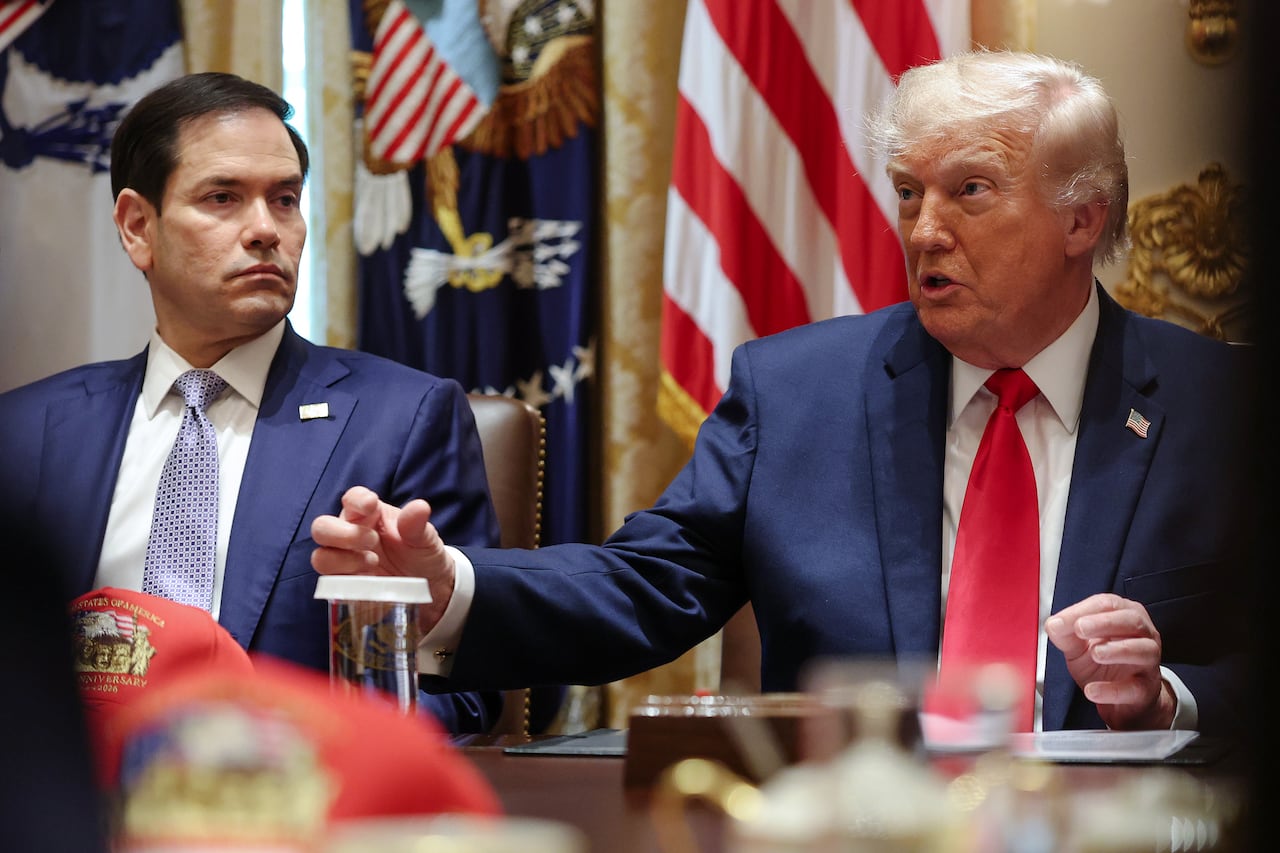
U.S. President Donald Trump and U.S. Secretary of State Marco Rubio during a public Cabinet meeting at the White House on Wednesday, where Rubio stated that Cuba is governed by ‘incompetent communists.’ (Win McNamee/Getty Images)
You left Cuba in your 30s and have resided in Miami since, returning only a few times. What changed for you? When did you decide to voice your criticisms against your family?
I began to speak out the first time I was given the chance. In this instance, it was a journalist from Spain.
I had felt misplaced for many years. My goal when I managed to escape was to get my daughter out of there. This occurred during the ’90s, known as the Special Period, when conditions were very similar to what we see today due to the cessation of Soviet support.
Was that your last visit?
I returned for the last time in ’22, for a brief stay.
And how was that experience?
Bittersweet, as always. It is a country you hold dear. It is where you find your true self. Yet, living there is not an option.
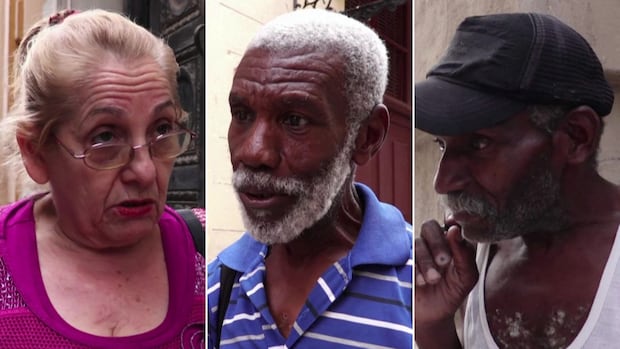
In Havana on Wednesday, residents condemned the U.S. indictment of former Cuban leader Raúl Castro, who was charged in connection with a 1996 incident in which Cuban jets shot down two civilian planes carrying exiles, killing four. ‘At that time, they had their defence and their right to defend their airspace,’ said Rosmery Pena, a legal adviser for self-employed workers.
U.S. Attorney General Todd Blanche … asserts that Raúl Castro will be held accountable in the United States. When was the last time he communicated with him?
A very long time ago, even prior to my departure, because I was vocal about my dissatisfaction with the country … I wasn’t discussing myself, but rather the circumstances surrounding me. That’s one of the tragedies of Cuba: dissent makes you an enemy. As a result, I lost all my family connections since then.
Would you support U.S. forces capturing him?
He is nearing 95 years old, and it would be distressing; I doubt it is even feasible. Nevertheless, he is [accountable] for a crime committed three decades ago. However, I believe this primarily serves as a leverage point rather than a genuine pursuit.
If … conversations between the U.S. and Cuba deteriorate further and military action is taken, what are your thoughts on that scenario?
I have frequently heard that such an action is unlikely. That is what I want to believe.
However, negotiations require both [sides]. At present, the Cuban leadership appears to be steadfast in their terms and shows no willingness to negotiate, which is irrational considering that the long-standing situation is unsustainable.
There is a universal desire for a better life, especially for future generations. This is unattainable in Cuba under the strict and rigid regime.
We have observed the U.S. engaging in military interventions elsewhere … with outcomes that have not significantly improved the situation for those nations. Do you believe the United States understands the potential consequences of military action?
Any comments I make based on my lack of knowledge would merely be speculation, to be honest, and I do not wish to mislead anyone. I am uncertain who truly holds power at this stage in [Cuba]. I am aware it is the military. Another peculiar historical fact is that the country is governed and owned by the military. However, what may unfold there is uncertain.
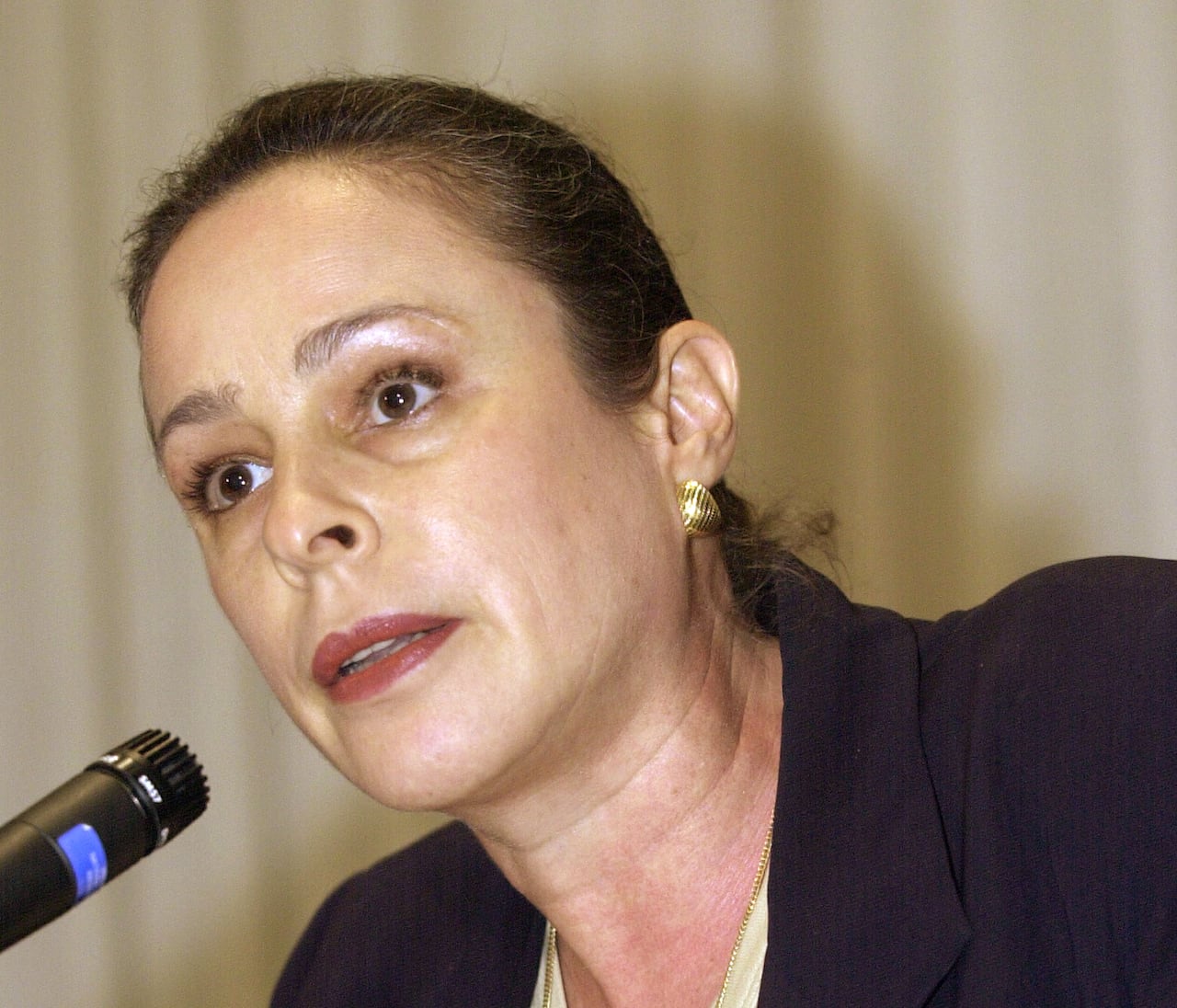
Cuban activist Alina Fernandez, seen here in 2003, expresses her hope for regime change in her homeland. (Stefan Zaklin/Getty Images)
[Cuban] Deputy Minister of Foreign Affairs Josefina Vidal-Ferreiro gave an interview to PBS this week and was specifically asked about U.S. Secretary of State Marco Rubio. Here’s her response.
“Secretary of State Marco Rubio lacks knowledge about Cuba. He has never set foot in Cuba. He does not grasp the dynamics of Cuba. His message, which clearly indicates the United States’ intent to dictate to Cubans what type of political system or order we should adopt, reveals his ignorance and our pride in our independence and resolve to protect it.”
What would you say to the minister?
From her position, it is easy to uphold the status quo that keeps many in despair.

