
The death toll resulting from a significant police crackdown on a notorious gang in Rio de Janeiro climbed to 119 on Wednesday, which includes four police officers, as reported by Brazilian authorities. Initially, authorities had reported 60 suspected gang members and four police officers as casualties following the operation on Tuesday conducted by 2,500 police and soldiers, leading to clashes in two impoverished neighborhoods in the city.
The number of suspects detained rose to 113 from the initial count of 81, as stated by police spokesperson Felipe Curi during a press briefing. The operation marked one of the most violent incidents in recent Brazilian history, prompting human rights groups to demand inquiries into the fatalities.
On Wednesday, Justice Minister Ricardo Lewandowski mentioned that the federal government had not been informed in advance about the raids. President Luiz Inácio Lula da Silva was reportedly shocked by the high number of casualties. Lewandowski intends to hold discussions with local officials in Rio.

The operation involved helicopters and armored vehicles and targeted the notorious Red Command gang in the vast, low-income favelas of Complexo de Alemao and Penha, according to the police.
The raid took place ahead of Rio preparing to host the C40 global summit of mayors focusing on climate change next week. This event is part of the lead-up to COP30, the United Nations climate summit scheduled for a 10-day session in November in the Amazon city of Belem.
‘A massive tragedy’
The United Nations’ human rights body expressed horror over the lethal police operation and urged for thorough investigations, emphasizing authorities’ obligations under international human rights law.
César Muñoz, the director of Human Rights Watch in Brazil, labeled Tuesday’s events as “a massive tragedy” and a “catastrophe.”
In a statement, Muñoz stressed, “The public prosecutor’s office should initiate its investigations to clarify the circumstances surrounding each fatality.”
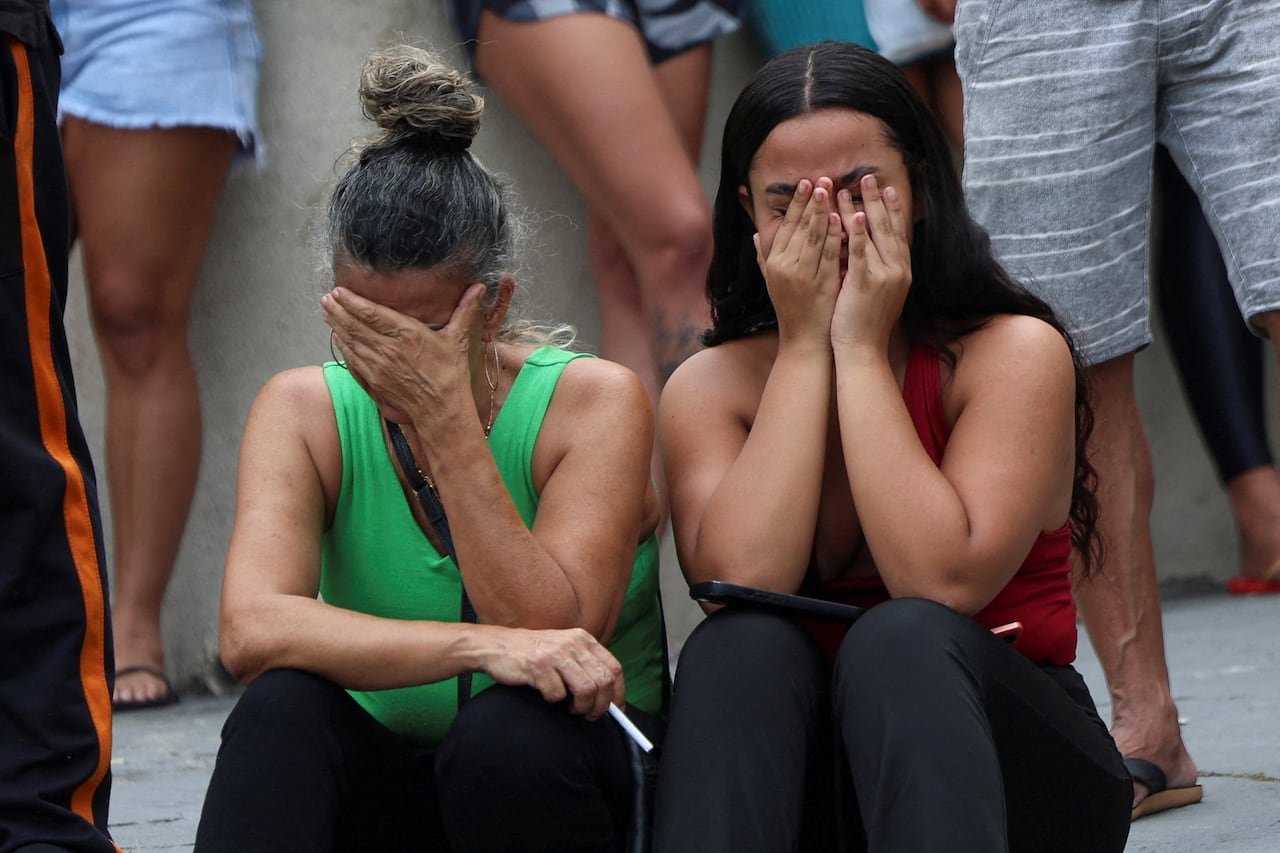
Social media footage displayed fire and smoke billowing from the two favelas amid gunfire. The city’s Education Department reported the closure of 46 schools in the two neighborhoods, and the nearby Federal University of Rio de Janeiro canceled evening classes, urging individuals on campus to seek shelter.
Alleged gang members reportedly blocked roads in northern and southeastern Rio in response to the operation, as per local media reports. The city’s transit organization Rio Onibus mentioned that at least 70 buses were seized for use in the blockades, resulting in substantial damage.
Police stated that the operation on Tuesday followed a year-long investigation into the criminal organization.
Castro, a member of the conservative opposition Liberal Party, previously indicated that the federal government should provide greater support in combating crime, indirectly criticizing Lula’s left-leaning government.
Gleisi Hoffmann, the liaison of the Lula administration with the parliament, acknowledged the need for coordinated action but highlighted recent efforts against money laundering as a demonstration of the federal government’s action against organized crime.
The Red Command criminal gang, emerging from Rio’s prisons, has expanded its influence in favelas in recent years.
Rio has been a site of deadly police operations for decades. In March 2005, around 29 individuals lost their lives in the city’s Baixada Fluminense region, while in May 2021, 28 fatalities were recorded <a

