
You recognize his voice and are likely familiar with his nature documentaries. But did you know that today marks his birthday?
Sir David Attenborough, the cherished broadcaster and wildlife authority, reaches the milestone of 100 years on May 8. For decades, he has been captivating audiences with the marvels of the natural world, enriching our homes, classrooms, and hearts.
His illustrious career, featuring iconic series such as Planet Earth, The Blue Planet, and Frozen Planet, remains vibrant; just last year, he unveiled his feature documentary for 2025, Ocean with David Attenborough.
Beyond his renowned narration and passion for all living beings, there’s much more to discover about his journey through life. Here are ten intriguing facts, one for each decade.
The animal he dislikes
It’s well-known that he has a fondness for animals.
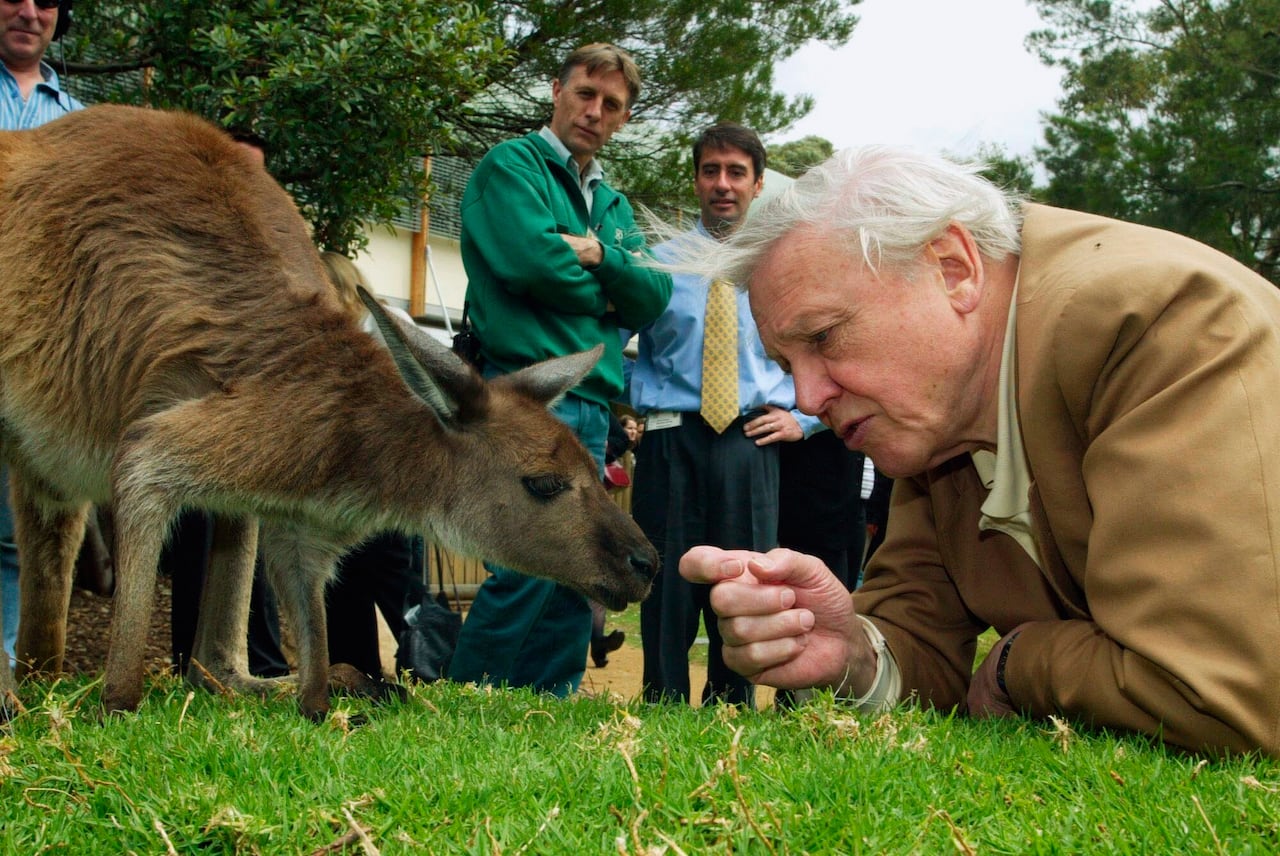
David Attenborough, observed by zoo personnel, interacts with a kangaroo during his visit to Taronga Zoo in Sydney, Australia, on October 14, 2003. (Dan Peled/The Associated Press)
However, there is one creature he does not favor.
Rats! He has openly expressed his aversion to them, attributing it to an experience during his time in the Solomon Islands, where he spent a night in a thatched hut during a storm. While lying in the dark, he felt movement in his sheets, only to discover it was a rat near his feet.
Over 40 species bear his name
Among those named after him are: Euptchia attenboroughi, a butterfly; Lepanthes attenboroughii, a tiny orchid; and in honor of his centenary, Attenboroughnculus tau, a newly identified species of wasp!
What connects all these species? They are all named in tribute to Attenborough.
“He has utilized his work to uncover the intimate, hidden, or neglected aspects of nature,” noted the researchers who described Attenboroughnculus tau in a published paper on Thursday.
Unsurprisingly, his name is widely recognized in the scientific community. More than 40 species are named in his honor, from frogs and plants to insects and even a constellation.

Maddie Hall, head of creative enterprise, observes numerous television screens displaying the face of broadcaster and naturalist David Attenborough from his early broadcasting days, before the public release of an immersive film celebrating his centenary, captured Wednesday in Devonport, England. (Ben Birchall/PA via The Associated Press)
He had an impact on the color of tennis balls
In the 1950s, he was actually turned down for a position at BBC Radio, but he would eventually be hired to work in television. By the 1960s, Attenborough served as a controller at BBC Two, overseeing the first color broadcasts in Europe in 1965.
In 1967, he introduced color cameras to Wimbledon. At that time, tennis balls were white, making them difficult for viewers to see against the court lines.
As reported by the BBC, Attenborough proposed a color change to something more vibrant and visible. The International Tennis Federation later conducted tests to determine the most visible color, ultimately settling on bright yellow.
He is a double knight
Indeed. He has received knighthood twice — first in 1985 from Queen Elizabeth, and again in 2022 from then-Prince Charles, becoming a Knight Grand Cross of the Order of St Michael and St George.
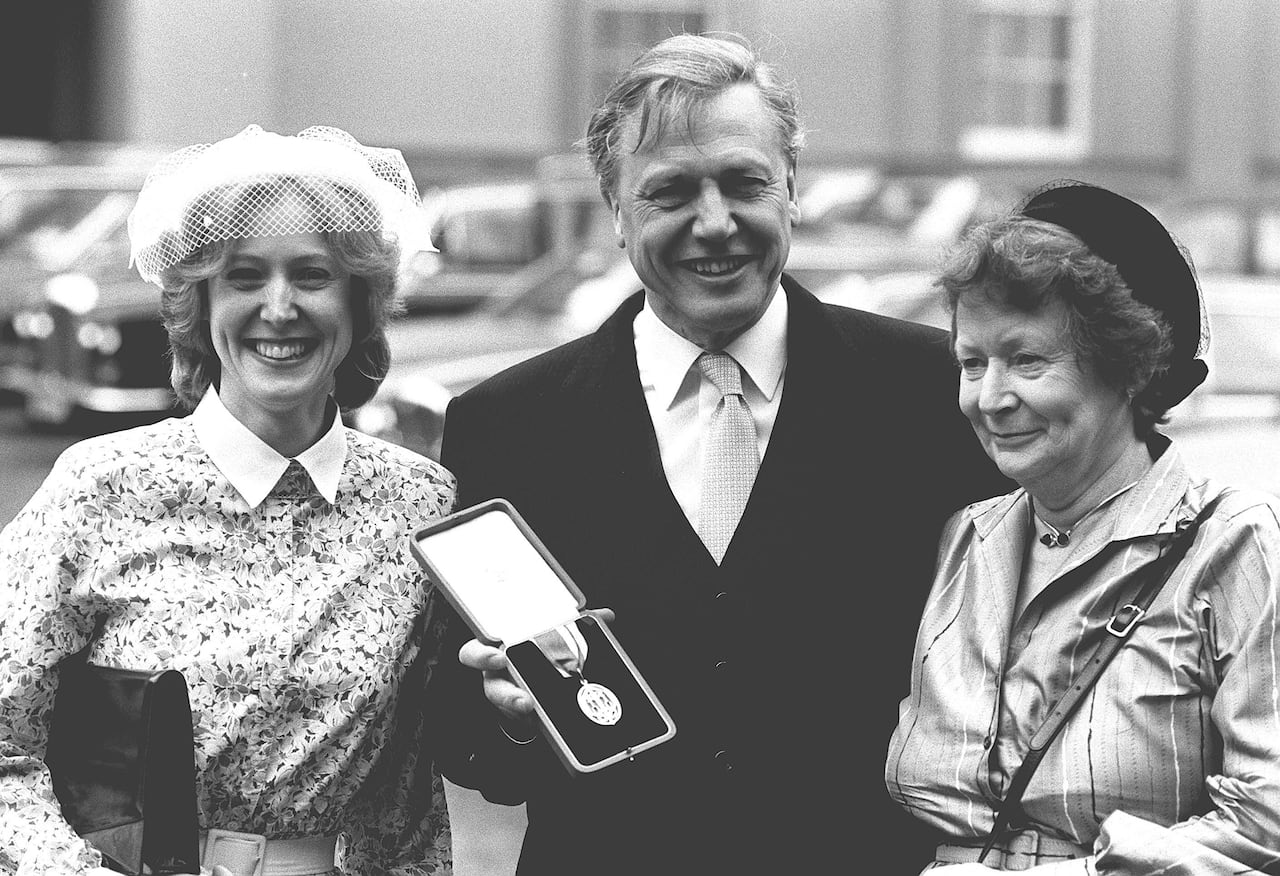
David Attenborough, who was knighted by the Queen during an investiture at Buckingham Palace, London, on July 30, 1985, poses for a photo with his wife Jane, right, and daughter Susan. (The Associated Press)
His trophy collection is impressive
The Guinness World Records states that Attenborough is the only individual to have won BAFTA awards across four different formats: color, black and white, HD, and 3D programming. Additionally, he holds the record as the oldest recipient of a Daytime Emmy at the age of 99 for The Secret Lives of Orangutans, a title previously held by Dick Van Dyke, who won at 98 the previous year.
He made a significant dive
Reports from the BBC and the Guardian indicate that in 2015, Attenborough accomplished a record-setting dive of 1,000 feet in a submersible to film segments of the Great Barrier Reef. At 89, he became the oldest individual to achieve such depth.
Nature was part of his childhood
At the age of 11, he sold newts collected from a local pond to the zoology department at University College Leicester for three pence each (equivalent to about $2 Canadian today), as noted by the University.
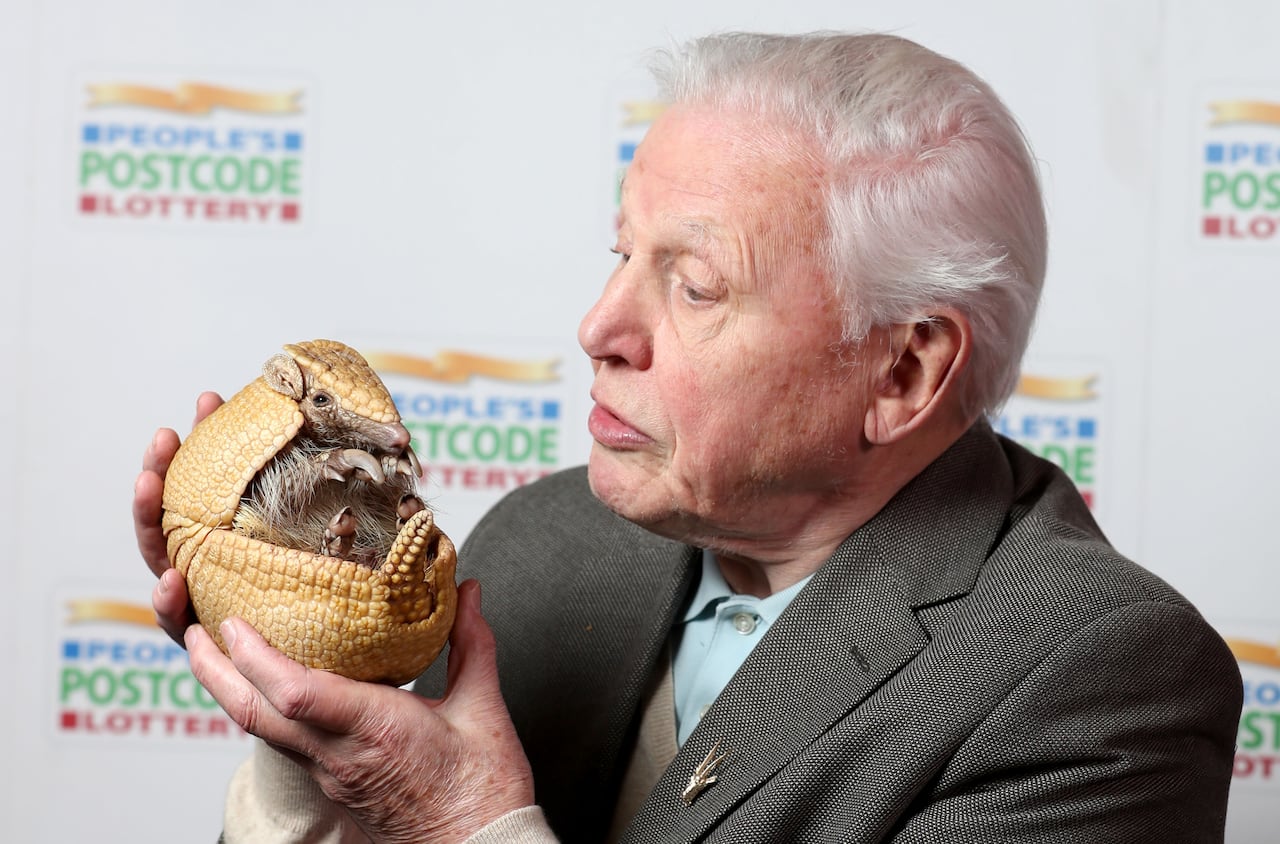
David Attenborough holds ‘Inti’, an armadillo from Edinburgh Zoo, before receiving a cheque from the People’s Postcode Lottery for the charity Fauna and Flora International, of which he is vice-president, at Prestonfield House, Edinburgh, on January 24, 2017. (Jane Barlow/The Associated Press)
He responds, but not through DMs
Despite receiving a large volume of fan correspondence, in a 2021 interview with BBC Radio 1, he mentioned that he receives around 70 letters daily, and if a self-addressed, stamped envelope is included, he may respond. However, don’t expect a direct message; the centenarian does not engage on social media.
He contributed to reducing single-use plastics
Following the airing of Blue Planet II in 2017, there was a significant global response. The series highlighted the issue of plastic pollution in oceans and its detrimental effects on birds and marine mammals.
“I believe we are altering our behaviors, and the world is becoming aware of what we have done to the planet,” he stated in 2019. At that time, he was recognized as a recipient of the Chatham House prize, awarded to individuals or entities that significantly advance international relations.
And if he could become an animal for a day, he’d be…
A sloth! He often humorously remarks that their lifestyle intrigues him due to their tendency to hang from trees and sleep for long periods, with little else to do. Here he is getting close to one, thank me later.

