
Alex Shved is battling Stage 4 cancer on two fronts.
The medication he is receiving as part of an early-phase clinical trial is, he hopes, working in conjunction with his body to combat the melanoma that has spread. Simultaneously, he is grappling with another significant adversary: the healthcare bureaucracy.
At 37 years old, Shved has explored multiple treatment options since he first noticed a growing mole in 2020. He continues to maintain a good quality of life, working in private equity and raising his two daughters, both younger than two.
“I will do whatever it takes to remain in their lives,” he stated during a recent interview. “I have no option but to keep pressing forward.”
However, the cancer is advancing, having infiltrated his bones and lungs. His oncologist indicated that he would be an ideal candidate for tumor-infiltrating lymphocyte (TIL) therapy. This approach entails surgically removing tumors, extracting immune cells that have penetrated them, multiplying those cells in vast quantities, and infusing chemotherapy; afterward, these multiplied cells are reintroduced into the patient to combat the cancer.
This treatment is not currently funded by public health care in Ontario, although it may be in the future, which presents a dilemma.

CBC News has obtained exclusive data showing how often Ontario turns to international healthcare, revealing proton beam therapy as one of the most commonly outsourced treatments. For The National, CBC’s Valérie Ouellet explores why this life-saving cancer therapy isn’t available in Canada and the toll it takes on families.
Last year, a variant of TIL therapy known as lifileucel received approval from Health Canada and is currently undergoing evaluations for potential funding by provincial drug plans, a process that may take years.
“I don’t have the luxury of time, because not only might I not be medically fit by the time it gets approved, but I might not even be here,” he remarked.
Government denial feels like ‘slap in the face’: patient
Shved’s oncologist sought out-of-country funding for him to undergo TIL therapy at the Moffitt Cancer Center in Florida, which could amount to about $1 million, according to Shved. The Ministry of Health turned down the request this spring, citing the ongoing review process for funding.
“The [Out-Of-Country] Prior Approval Program is not intended as a means to provide temporary drug funding for indications currently under review or anticipated to be reviewed for public funding in Ontario,” the correspondence stated.
The regulation referenced in the denial letter indicates that for cases primarily involving drug administration, the executive officer designated under the Ontario Drug Benefit Act must recommend the treatment for individuals in similar medical situations.
The executive officer did not endorse funding, the letter asserts, providing no further clarification aside from mentioning the interim funding period.
-
CBC Investigates
Why millions of Canadian taxpayer dollars are spent on U.S. medical treatments
-
Health Canada permits temporary import of Chinese-authorized chemo injection drug amid critical shortage
Shved was taken aback not only by the concise and formulaic nature of the letter detailing what could be a life-or-death decision but also by the absence of any mention of interim funding periods in the regulations governing Ontario’s out-of-country coverage.
He argues that the rationale for the denial presents a catch-22 situation, suggesting that Ontario is unwilling to fund the treatment now because it might approve it later—when it could be too late.
Shved has appealed the decision to the Health Services Appeal and Review Board, submitted a request for judicial review, filed freedom-of-information requests for internal documents that might clarify how the decision was made, reached out to the executive officer, and contacted multiple cabinet ministers and politicians.
“To have the government reject it without even, frankly, considering your case, just applying some blanket legal statement that doesn’t exist in the policy feels like a bit of a slap in the face,” he expressed.
“What makes it worse is that when you attempt to reach out for an explanation—not to persuade them to change their minds, but to understand how this determination was made—you receive no response.”
Ministry of Health commits to discussing with team
After Shved’s story was featured in the Globe and Mail, Health Minister Sylvia Jones contacted him. He urged her to expedite regulatory changes to the out-of-country funding program and highlighted that TIL therapy is also available in Israel and Turkey at a fraction of the U.S. cost. The minister informed him that while she cannot intervene in individual cases, she would consult with her team.
The Ministry of Health stated that provinces participating in the pan-Canadian Pharmaceutical Alliance do not provide out-of-country funding for drugs that have not completed the standard review and funding process.
“Once that process concludes, each participating jurisdiction will independently determine whether to publicly fund the therapy for qualified patients,” spokesperson W.D. Lighthall stated.
“In line with this policy, there have been no cases of Ontario approving out-of-country funding for a drug while it is still under the national (drug) negotiation process.”
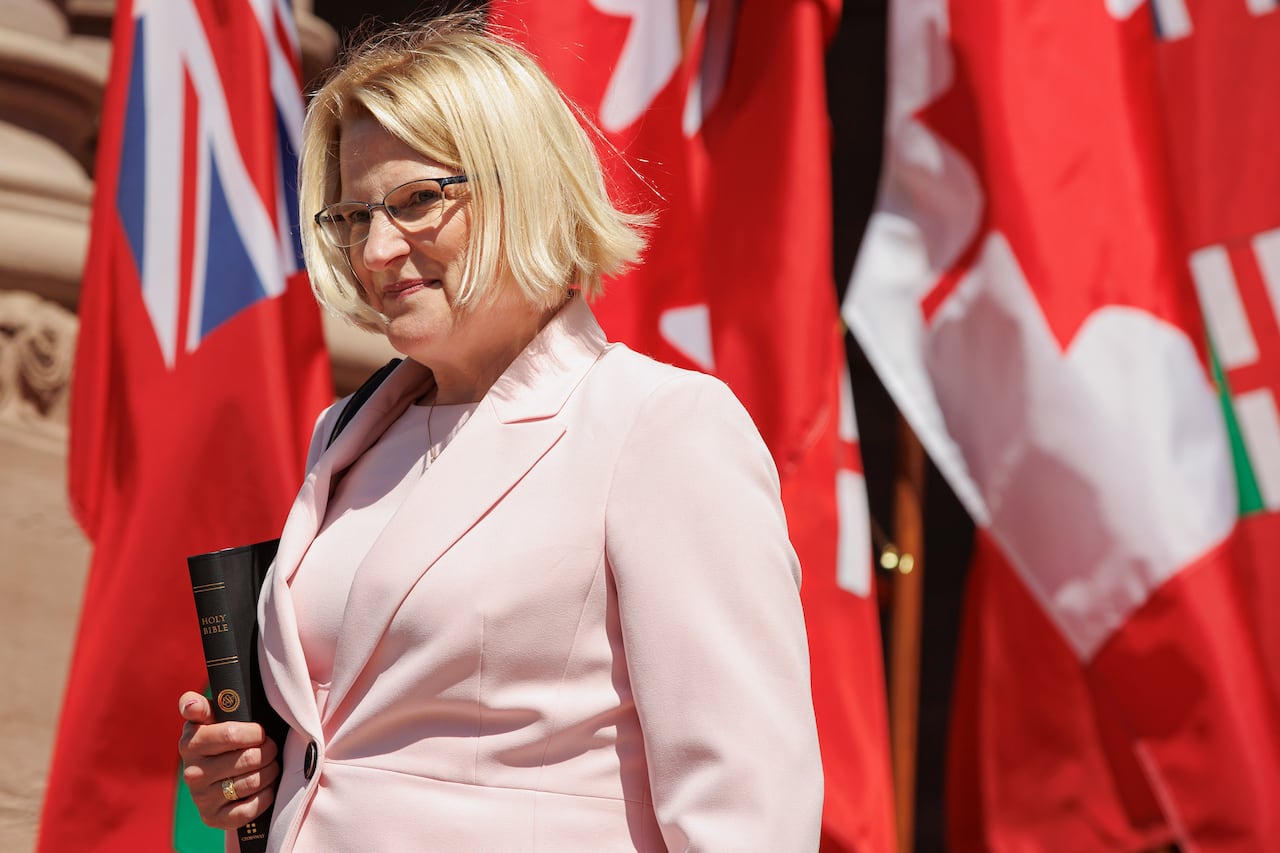
Health Minister Sylvia Jones reached out to Shved after his story gained attention, indicating she cannot intervene in individual cases but would consult her team. (Evan Mitsui/CBC)
Neither the ministry’s statement nor the rejection letter to Shved provides any rationale.
Dr. Joel Lexchin, a professor emeritus at York University specializing in health policy and pharmaceutical policy, speculated that the province is reluctant to pay U.S. prices, as the treatment is likely to be considerably cheaper if it becomes funded in Ontario.
“Public payers view the situation from the standpoint that, on average, American drug prices for patented medications are between two-and-a-half and three times higher than Canadian prices,” he noted.
Additionally, the province is likely considering alternative ways to allocate funds within the healthcare system, Lexchin added.
“These decisions are never straightforward, as they involve weighing one specific case against broader considerations,” he remarked.
Shved intends to continue fighting against bureaucracy and cancer
According to Lexchin, it typically takes around 730 days from the point a drug is approved by Health Canada until a funding decision is made by provincial authorities. Some of this delay is attributed to government processes, while part is due to the speed at which a pharmaceutical company submits its applications.
There are multiple steps that must be completed between Health Canada approval and provincial funding, including evaluating the cost relative to the quality of life extension the drug provides and negotiations regarding pricing between the manufacturer and provincial drug plans.
This is time that Shved may not have.
-
Cancer remains top cause of death in Canada as new study shows multiple types rising
-
Organization that flies rural Canadians to their medical appointments turns 40
As he fights to remain present in the lives of his wife and daughters for as long as possible, hoping the province will fund TIL therapy for him in the U.S. and that the Phase 1 clinical trial he is participating in will yield positive results against his cancer, he harbors another desire.
He wishes for greater transparency in the consequential decision-making processes of the healthcare bureaucracy.
“Perhaps (others denied out-of-country funding) lack the time, energy, or health to contest this,” Shved remarked.
“I feel it is my responsibility to advocate for both myself and many others.”

