
Last week, when aid worker Kalongo Rwabikanga and his team reached a hospital at the heart of the Ebola outbreak, they were met by an enraged crowd surrounding their vehicle.
Rwabikanga, affiliated with the humanitarian group Action Entraide, was visiting Rwampara General Hospital on Thursday, located just outside Bunia in Ituri province, Democratic Republic of Congo.
“The mob approached us, encircled our car, and accused us, saying, ‘You are the NGO. You are responsible for bringing Ebola here to kill our people, so we are going to kill you all and then set your vehicle on fire,'” Rwabikanga recounted to As It Happens host Nil Köksal. “We were terrified.”
He described how the crowd began throwing stones at the vehicle, forcing individuals out and threatening to assault them. Police present fired shots into the air, allowing the aid workers to flee. However, shortly afterward, individuals set fire to a part of the hospital, including the Ebola isolation tents, which compelled medical personnel to evacuate.
This arson incident was one of three attacks in recent weeks targeting healthcare facilities in the DRC, where misinformation is spreading rapidly alongside an uncommon strain of Ebola that currently has no vaccine available.

Some locals believe that non-governmental organizations are to blame for the disease’s introduction to the country, according to aid workers, while others assert that the disease does not exist at all.
“These people should stop bothering us. They just want to get rich,” remarked Pierre Basola, a 56-year-old Bunia resident. “Let’s not forget that Ebola is a creation of white men.”
Vanny Birungi, a Red Cross volunteer in eastern Congo, expresses that each time she engages with the community, she faces a dual threat — the Ebola virus and hostility from the locals.
“We keep informing them that the disease is present,” Birungi stated. “Some people accept this, while others refuse to believe it.”
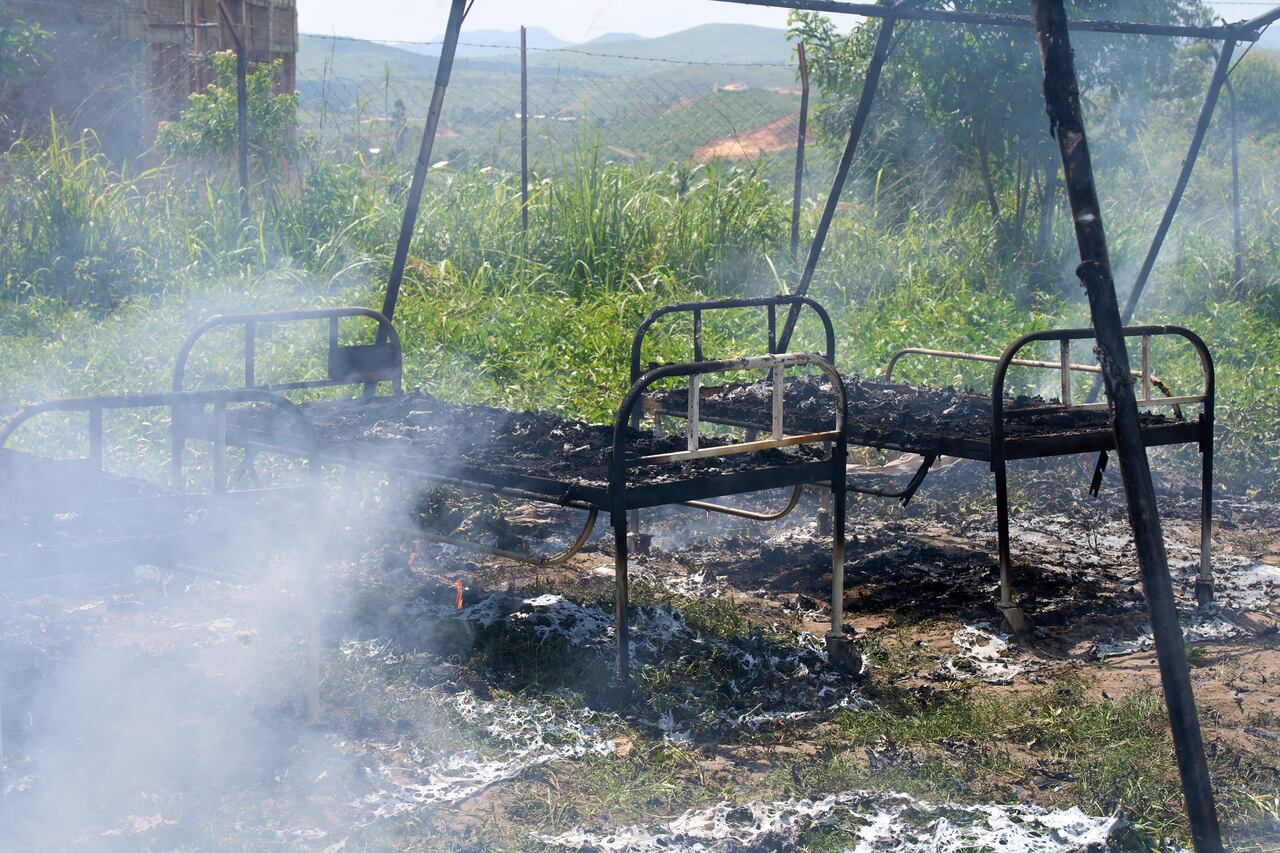
Charred hospital beds remain at the smoldering Ebola treatment center in Rwampara after it was set ablaze by individuals upset at being prevented from retrieving a body. (Dirole Lotsima Dieudonn/The Associated Press)
Rwabikanga attributes the rise in violence to “ignorance” and “propaganda,” both of which he believes have intensified, partly due to the extended period the disease was allowed to spread before being identified, and the rapidity with which it is now causing fatalities.
According to the World Health Organization, there are approximately 900 suspected Ebola cases and over 220 related deaths associated with the outbreak, which has recently expanded into neighboring Uganda.
The outbreak is centered around a rare strain of the Ebola virus known as Bundibugyo. The WHO suspects it had been spreading and causing deaths for weeks, or even months, before it was detected, as officials had been focused on testing for a different, more prevalent strain.
Consequently, by the time patients present at hospitals and treatment centers with symptoms, the illness has already progressed significantly, often resulting in deaths within care, as noted by Ahmed Mahat, manager with International Medical Corps. This, in turn, fuels further speculation.
“People believe that individuals arrive and then die once they get there,” Mahat explained.
Community members are also frustrated by virus prevention measures that hinder them from recovering their loved ones’ bodies for last rites. Contact with the bodies of infected individuals is one of the primary methods of Ebola transmission.
Several attacks, including the one in Rwampara, have been executed by residents demanding to take deceased individuals home.
Mahat asserts that the nation is ill-equipped to manage the crisis.
Foreign aid from the U.S. that previously bolstered the country’s healthcare system has been significantly reduced in recent years. Various armed groups exert control over portions of the nation, which keeps large segments of the population on the move.
“In some of the affected health zones, there is a lack of protective equipment. Medical supplies are insufficient. Resources are inadequate, and laboratory facilities are basic,” Mahat stated. “There is much work to be done.”
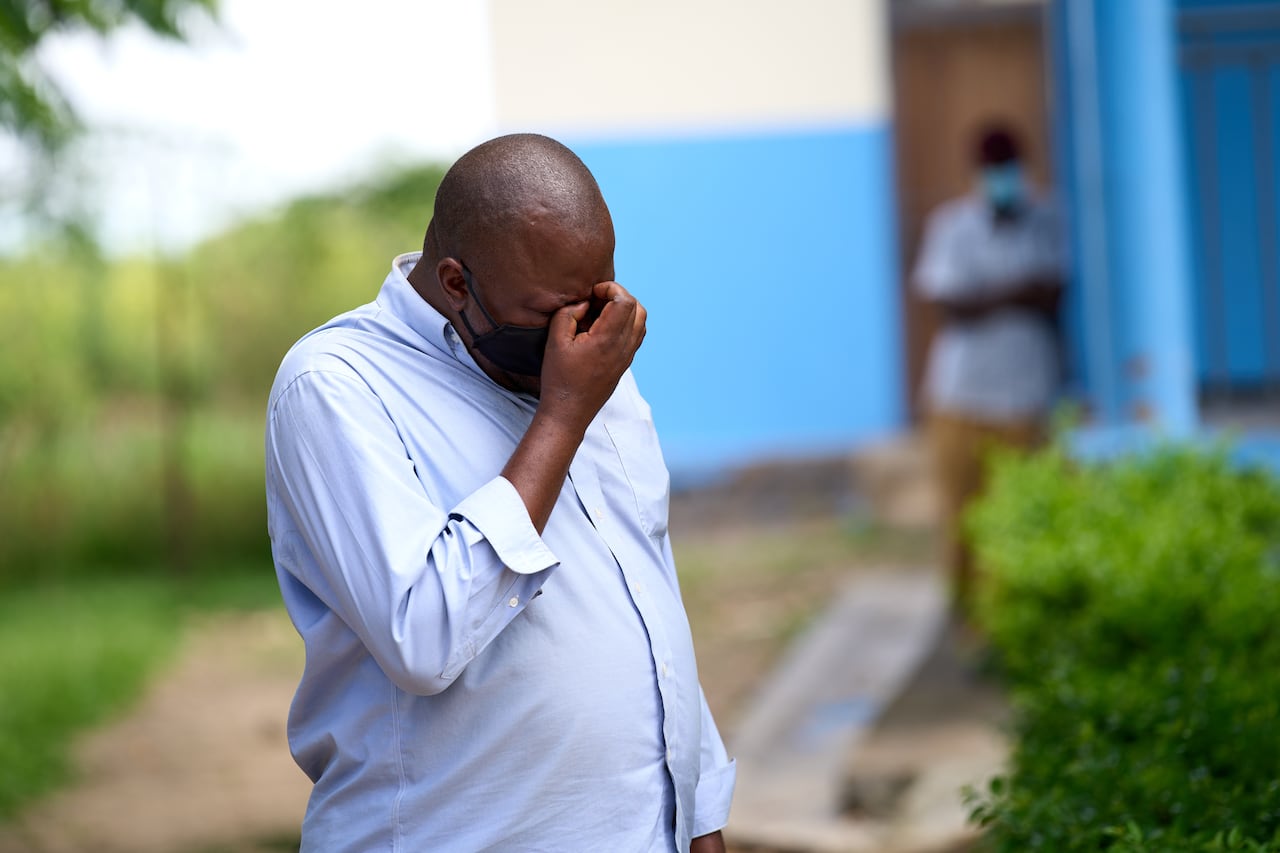
A man shows distress at the site of the Rwampara arson attack. (Dirole Lotsima Dieudonn/The Associated Press)
His organization is addressing the crisis on two levels. They are working to establish two isolation units for Ebola patients while also connecting with community leaders, religious figures, and other influential members to foster trust and disseminate information.
“We will hold daily and weekly discussions with them. They will be involved in all our initiatives,” he remarked. “They can witness how operations are conducted, which will help alleviate some of the fears within the community.”
-
Ebola survivor calls for compassion as fear, unrest spread during outbreak
-
As rare Ebola virus spreads in Congo, residents say ‘nobody knows whether they are safe’
Rwabikanga stated that Action Entraide is also collaborating with local leaders to combat misinformation and educate the populace regarding Ebola.
Despite the recent threats and violence, he pledged to persist in their efforts.
“This cannot deter us from doing good work,” he affirmed. “We have resolved to continue serving the community.”

