
Molly Boyce intended to return to her hometown of Eabametoong First Nation to establish a detox program in partnership with her sister, Wanda Atlookan-Sugarhead.
After obtaining her high school diploma in Thunder Bay, Ontario, in 2018, Boyce subsequently joined the practical nursing program at Oshki-Pimache-O-Win: The Wenjack Education Institute.
Boyce passed away in 2024, shortly before she was set to finish her studies. She was 54 years old.
“She was on track to graduate that fall,” her younger sister, Judy Ostamas, remarked.
Boyce faced challenges with addiction and endured homelessness for an extended period. Prior to her return to education, she took part in the Kwae Kii Win Managed Alcohol Program, which is provided by Shelter House and NorWest Community Health Centres (NWCHC).
Following her participation, she became employed at Shelter House, where she assisted some of the community’s most at-risk individuals.

Ken Ranta, the chief executive officer of the Thunder Bay District Social Services Administration Board, addresses a crowd during the opening ceremony of the new Kwae Kii Win Managed Alcohol Program facility in Thunder Bay, Ontario. (Sarah Law/CBC)
On Tuesday, partners from the community gathered to mark the opening of the newly established Kwae Kii Win facility on Donald Street East, with the kitchen dedicated in Boyce’s honor.
“This space is truly an eye-opener for me, and the acknowledgment that she’s receiving is profound,” Ostamas stated. “I just spoke with a woman… who mentioned that she would not be where she is today without my sister’s influence.”
The newly upgraded facility, owned by Shelter House, can accommodate up to 17 individuals seeking recovery from alcohol dependence.
Previously, residents had been accommodated in a building adjacent to the shelter that “wasn’t intended for residential use,” explained Shelter House’s executive director, Brendan Carlin.

The new facility located at 400 Donald St. E. in Thunder Bay, Ontario, is designed to house up to 17 residents. (Sarah Law/CBC)
In this program, residents can access safe, controlled doses of alcohol under the supervision of healthcare professionals, in addition to receiving integrated medical care and various support services focused on social, cultural, and wellness needs.
The Thunder Bay District Social Services Administration Board (TBDSSAB) funded the acquisition and renovations of the facility, with assistance from provincial grants. Residents are anticipating moving in next week.
“It did not appear like this before. It was a basic, warehouse-style structure,” noted Ken Ranta, the CEO of TBDSSAB.
“Seeing everything beautifully arranged today is fantastic.”
Integrating health and social services
Juanita Lawson, the CEO of NWCHC, shared that the organization and its collaborators have spent years advocating for increased support to enhance the healthcare component of the program.
“This advocacy led to a vision of exploring alternative approaches,” Lawson explained.
“We aim to provide dignity, personal space for resting at night, a kitchen for skill development, and areas for programming.”
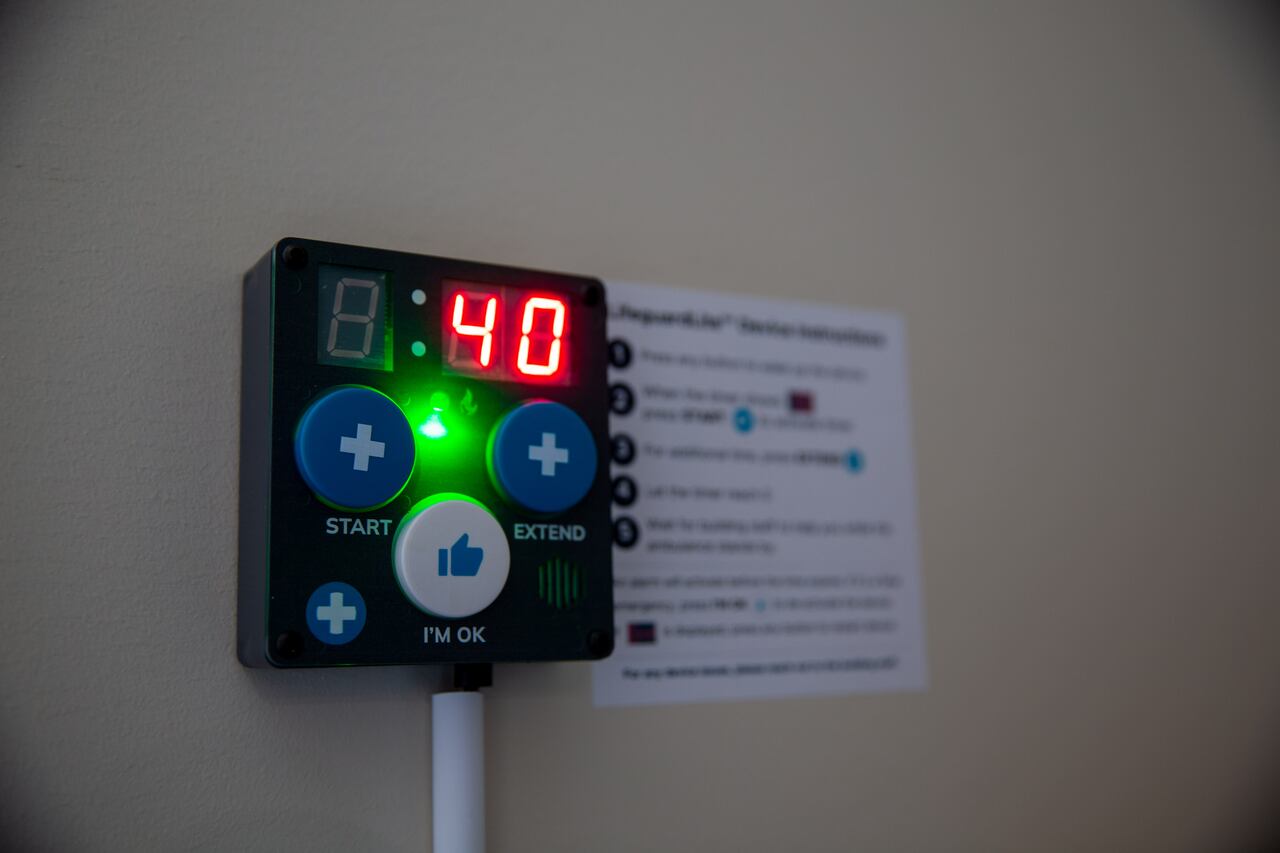
Residents can activate a button next to their bed to initiate a timer for substance consumption. If the timer expires without the resident confirming, staff are notified for potential assistance. (Sarah Law/CBC)
NWCHC utilizes a complimentary mobile application called LifeguardConnect to send alerts regarding hazardous substances available in the area.
Those consuming substances in isolation can also use the app to set a timer that will notify emergency medical services of their location if it isn’t deactivated, indicating a possible overdose situation.
-
New opioid use disorder guide combines Western science and Indigenous knowledge
-
Overdose awareness walk in Thunder Bay, Ont., aims to put city’s drug crisis in the spotlight
The new Kwae Kii Win facility includes a physical version of this timer, known as LifeguardLite, located in the residents’ bedrooms. Additional features include smoke detectors, evacuation alarms, and temperature monitoring systems.
Lawson expressed her desire to further enhance the program to better cater to individuals’ healthcare needs.
‘Recovery is not one-size-fits-all’
Carlin expressed his satisfaction that residents will enjoy more space, including private bedrooms and shared areas with couches and televisions.
“They can find relaxation more easily. There are more programs available for them. Health support is conveniently located within the facility.”
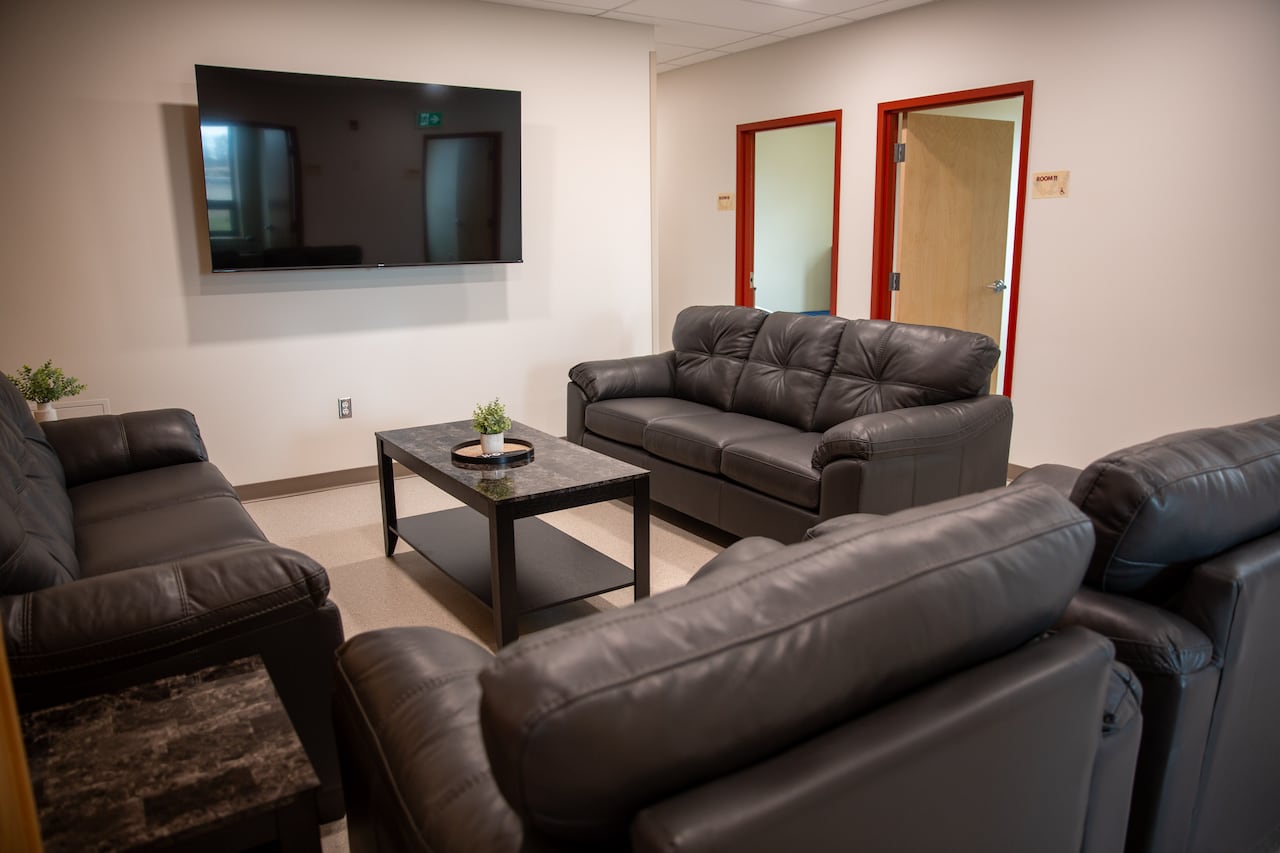
The newly established Kwae Kii Win facility in Thunder Bay, Ontario, features separate communal areas for residents to unwind. (Sarah Law/CBC)
While some critics argue that managed alcohol programs enable drinking, Carlin emphasized the importance of acknowledging that “recovery is not a one-size-fits-all approach.”
“This program helps us stabilize individuals who are homeless or at risk of homelessness by providing them a safe place to live,” he stated.
“This is their home, and we are here to support their journey towards healing.”
-
Ontario housing minister announces millions to address homelessness in Thunder Bay, Ont.
-
Reintegration from corrections a ‘critical juncture’ in northern Ontario’s drug crisis
Ostamas admitted that she had reservations about the program before her sister became involved.
“This is a community. This was her home and where she began,” Ostamas reflected.
“I feel honored and very proud of my sister’s achievements.”

