
The Winnipeg-based clothing retailer Warehouse One is set to close all 128 of its stores, which include the Bootlegger brand.
The company has initiated proceedings in Manitoba under the Companies’ Creditors Arrangement Act, citing insolvency and an inability to cover payroll or rent without court protection.
In an affidavit, Director and Officer Shamsh Kassam indicated that the company is experiencing an “acute liquidity crisis,” as dwindling foot traffic and increasing competition from affordable fast-fashion brands and online retailers have negatively impacted the jean store, which was established in Winnipeg in 1977 and continues to be based there.
According to the affidavit, Warehouse One “is unable to meet its immediate financial obligations as they arise.”
The company employs 982 individuals, including 232 in Manitoba, where it operates 16 stores. All employees are non-unionized, with 403 serving in full-time positions, according to a report from Alvarez & Marsal Canada Inc., the monitoring firm.
The stores are located across eight provinces and the Yukon, primarily situated in shopping malls or leased spaces, with the exception of one store in Kenora, Ontario.
The shift towards off-price retail
Kassam noted that roughly one-third of the company’s retail presence is in “small-town Canada,” accounting for about 40 percent of total sales.
Sales in these smaller towns have fallen by over 10 percent year-on-year due to an aging customer demographic and a surge in e-commerce, he explained.
Doug Stephens, the founder of Retail Prophet, a consultancy and research firm located in Toronto, stated that Warehouse One’s predicament mirrors the challenges consumers are currently facing in the economic landscape.
“With inflation at its current level and increasing job insecurity in the nation, consumers are being very cautious and are spending in a manner typical of careful shoppers,” he remarked.
“There is a noticeable trend towards off-price [stores that offer brand-name products at discounted rates]. Off-price retail has been experiencing significant growth.”
Founded in Winnipeg in 1977 and still headquartered there, Warehouse One has stores across eight provinces and the Yukon. (Rudi Pawlychyn/CBC)
“What’s notably absent is the mid-tier segment of the market, which is typically home to many mall-based retailers. Consumers are increasingly overlooking that segment,” he added.
Stephens observed that businesses like Value Village, Winners, and Marshalls, as well as online retailers such as Poshmark, have seen robust revenue growth in recent years. Meanwhile, luxury retail continues to thrive at the opposite end of the market.
-
Hudson’s Bay’s demise marks the death of the traditional department store in Canada
-
Saks Global files for bankruptcy after Neiman Marcus takeover leads to financial collapse
“There was certainly a fallout in the department store sector, which was among the first to be affected. Now, that trend is beginning to spread,” he noted.
Consequently, what were once regarded as A-level malls, known for their prime retail spaces, have shifted to B-level status, characterized by a decline in recognizable brands and an increase in less desirable retail outlets.
This shift means that residents in smaller towns are often required to travel greater distances to find suitable shopping options or resort to online purchases.
“Each time a mid-tier retailer closes, it creates more opportunities for a company like Amazon to expand,” Stephens remarked.
This is the reality faced by Amanda Wesselink in Quesnel, B.C., who regularly visited Warehouse One for holiday gifts, birthday presents, and clothing for herself and her husband.
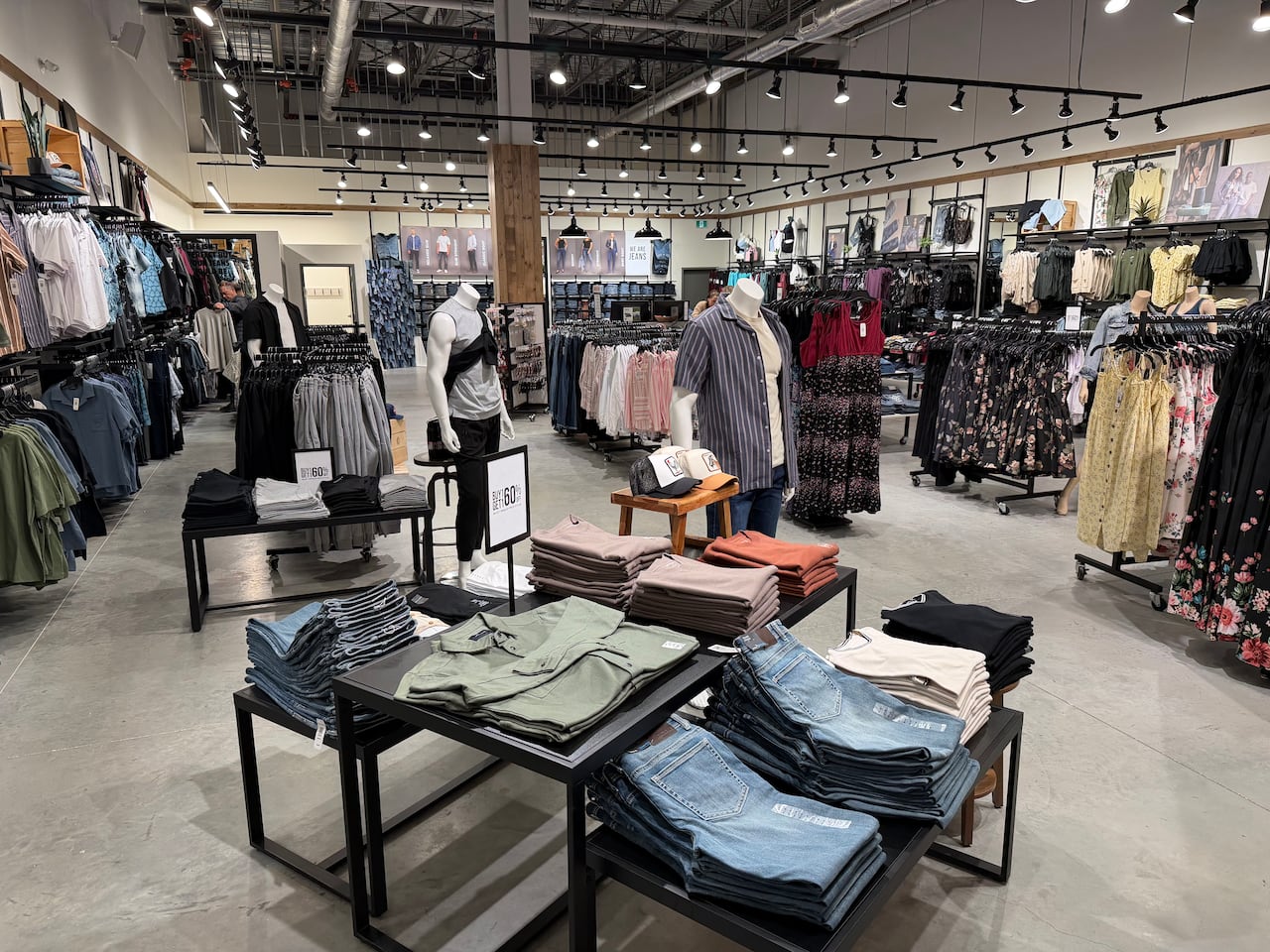
The operator of Warehouse One and Bootlegger brands employs 982 individuals, with 232 based in Manitoba. (Rudi Pawlychyn/CBC)
“We don’t have many options in this area. That’s really our only place for affordable clothing in town,” she stated.
“It’s also unfortunate for the employees, as they are all wonderful and very helpful. This means more job losses.”
While a few other clothing stores exist in Quesnel, one falls outside her budget, and the other lacks the variety that Warehouse One offers.
“So, we’ll have to turn to online shopping, which can be challenging since you can’t try things on,” she explained. The alternative is a lengthy 90-minute drive to Prince George.
$21.5M net loss in 2 years
According to Kassam’s affidavit, Warehouse One reported a net loss of approximately $15 million in its most recent fiscal year, following a $6.5 million loss the previous year.
The financial difficulties were exacerbated by the 2025 acquisition of the casual apparel brand Bootlegger, which resulted in a 50 percent increase in costs year-over-year, nearly negating any revenue increase from Bootlegger’s stores.
-
Hudson’s Bay is gone but legacy of company that birthed Winnipeg is hidden in plain view
-
Court approves $18M sale of 350-year-old HBC royal charter to Thomsons, Westons
As of April 28, the company owed over $33 million to its owners and other affiliates that provided loans, along with approximately $7 million to a senior lender, according to the pre-filing report.
Additionally, it had around $7 million in debts to unsecured creditors, primarily merchandise suppliers, and about $900,000 in unpaid gift card obligations.
The Manitoba Court of King’s Bench granted a request to honor those gift cards until May 13 as part of the application process.
Warehouse One operates a centralized warehouse and distribution center in Winnipeg, which is leased from an affiliate of its majority shareholder, WHO Industries Inc.
WHO Industries rescued Warehouse One’s assets from receivership in 2002. The company remained profitable until the onset of the COVID-19 pandemic, according to Kassam’s affidavit.

