
Prime Minister Mark Carney engaged in a dialogue with Pope Leo regarding artificial intelligence, emphasizing the “necessity for AI to prioritize humanity” — a discussion that follows the Pope’s recent call for governments to pause the advancement of AI technologies.
In a statement shared with journalists on Friday afternoon, Carney’s team noted that the prime minister, who is a committed Catholic, is “appreciative of the Pope’s guidance on this matter.”
“Prime Minister Carney conveyed Canada’s aspiration to take a global lead in the responsible development of AI and resources that benefit the international community,” the statement said.
Additionally, a separate press release from the Vatican indicated that the two leaders talked about “the significance of approaching artificial intelligence from an ethical standpoint with a focus on human values,” as well as other subjects like fostering peace in the Middle East and Ukraine.
Earlier this week, the Pope released his inaugural encyclical, which serves as one of the most significant forms of teaching from a Pope to the members of the Catholic Church. He cautioned that AI systems might propagate misinformation, fuel conflicts, and could potentially lead humanity towards perpetual warfare.
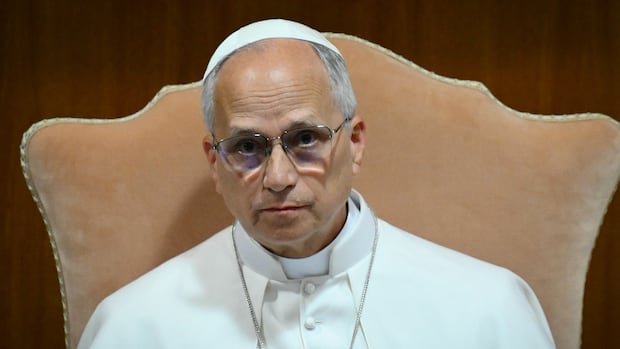
In the first open letter from his papacy, Pope Leo urged governments to slow down the development of AI systems, saying they prioritize conflict and risk leading the world down a path of unending war.
“What is required is a more proactive political engagement that can decelerate progress when everything is speeding up,” stated Leo in the document titled Magnifica Humanitas, or Magnificent Humanity.
The Pope referenced the biblical tale of the Tower of Babel — where human pride drives individuals to construct a tower that reaches Heaven, inciting God’s wrath — and suggested that the narrative illustrates the dangers of any endeavor that “aims to ascend to heaven without divine approval.”
“With the heart of a shepherd and a father, I urge everyone to abandon the construction of yet another Tower of Babel and unite to promote the common good,” he expressed.
The letter also condemned numerous ongoing conflicts worldwide, expressed concern about the diminishing strength of multilateral organizations, and highlighted that profits from the arms industry contribute significantly to these disputes.
“The past six decades have been characterized by conflicts of shocking brutality, often impacting civilian populations on a grand scale,” remarked Leo in the English-language version.
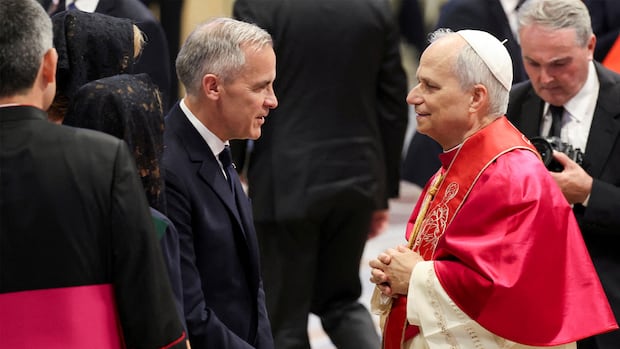
Pope Leo XIV kicked off his papacy with his inaugural mass in Vatican City, drawing thousands including Canadian Prime Minister Mark Carney, who used the visit to meet with global leaders in preparation for next month’s G7 in Alberta.
“Humanity is descending into a culture of violent power, where peace seems not to be a responsibility to uphold, but merely a fleeting moment between conflicts,” he stated.
AI strategy coming next week: Carney
On Wednesday, Carney revealed that the long-awaited national AI strategy from the federal government, which has experienced several delays in recent months, will be unveiled next week.
This strategy is anticipated to outline Ottawa’s approach to the swiftly evolving technology. In its spring economic update, the government presented the six foundational pillars that will support the national strategy:
- Safeguarding Canadians and protecting our democratic values.
- Empowering the Canadian populace.
- Facilitating AI adoption for collective prosperity.
- Establishing a Canadian sovereign AI framework.
- Enhancing the capabilities of Canadian leaders in AI.
- Forging reliable partnerships and global coalitions.
Regarding the global alliances pillar, the economic update remarked that “Canada will collaborate with various trusted partners to standardize practices, co-invest in innovation, and assist Canadian businesses in accessing global markets — while fostering an AI ecosystem rooted in democratic principles.”
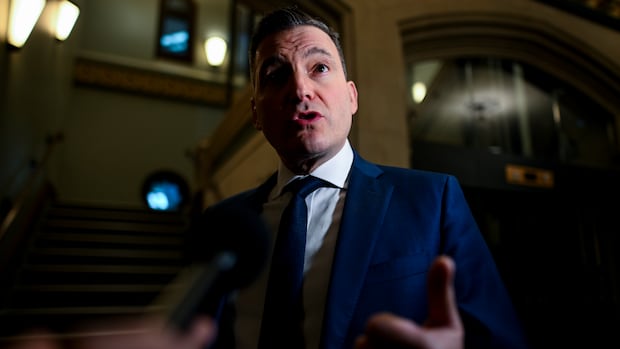
Telus will build a new AI data centre in B.C., under the federal Enabling Large-Scale Sovereign AI Data Centres initiative, Minister of Artificial Intelligence and Digital Innovation Evan Solomon announced on Monday. The project ‘reflects the kind of ambitious infrastructure that we need as a country,’ Solomon said.
Several executives in Canada’s technology sector have expressed optimism that the strategy will not just bolster the AI sector but also propel its expansion, enabling Canada to emerge as a frontrunner in AI technologies, talent, and enterprises.
In the meantime, certain provinces are contemplating taking initiatives on AI independently, such as Manitoba, which has introduced Canada’s first ban on social media and AI chatbots for individuals under 16. The federal government has previously indicated it is considering a similar measure.

