
Grand Erie Public Health (GEPH) in southern Ontario is urging former patients of Dr. George Chan Dentistry to undergo testing for hepatitis B, hepatitis C, and HIV.
Records obtained by CBC News through a freedom-of-information (FOI) request reveal that 884 patients from the Brantford clinic were previously notified to get tested due to issues with equipment sterilization. The health unit indicates that approximately half of those who visited the clinic between Nov. 3, 2021, and Nov. 3, 2025, have completed the suggested testing.
The clinic located at 353 St. Paul Ave, was closed on Nov. 3.
Chan is recorded on the Royal College of Dental Surgeons of Ontario (RCDSO) website as having resigned as of July 2. In a statement to CBC News, the RCDSO clarified that his resignation means “he is no longer permitted to practice dentistry in Ontario.”
Lyn Portelli, a former receptionist at the clinic, informed CBC News that she was the one who lodged a complaint with GEPH on Oct. 29, 2025, after she investigated a patient room on Oct. 28 while still employed there. She stated that this prompted GEPH’s investigation, which was conducted by Infection Prevention and Control (IPAC).
According to GEPH, the investigation uncovered 15 failures in the cleaning and sterilization of reusable tools at Chan’s clinic.
In mid-March, GEPH began sending letters to patients, which were dated Feb. 26, 2026. The patient recall was initiated in March, as noted in the IPAC report.
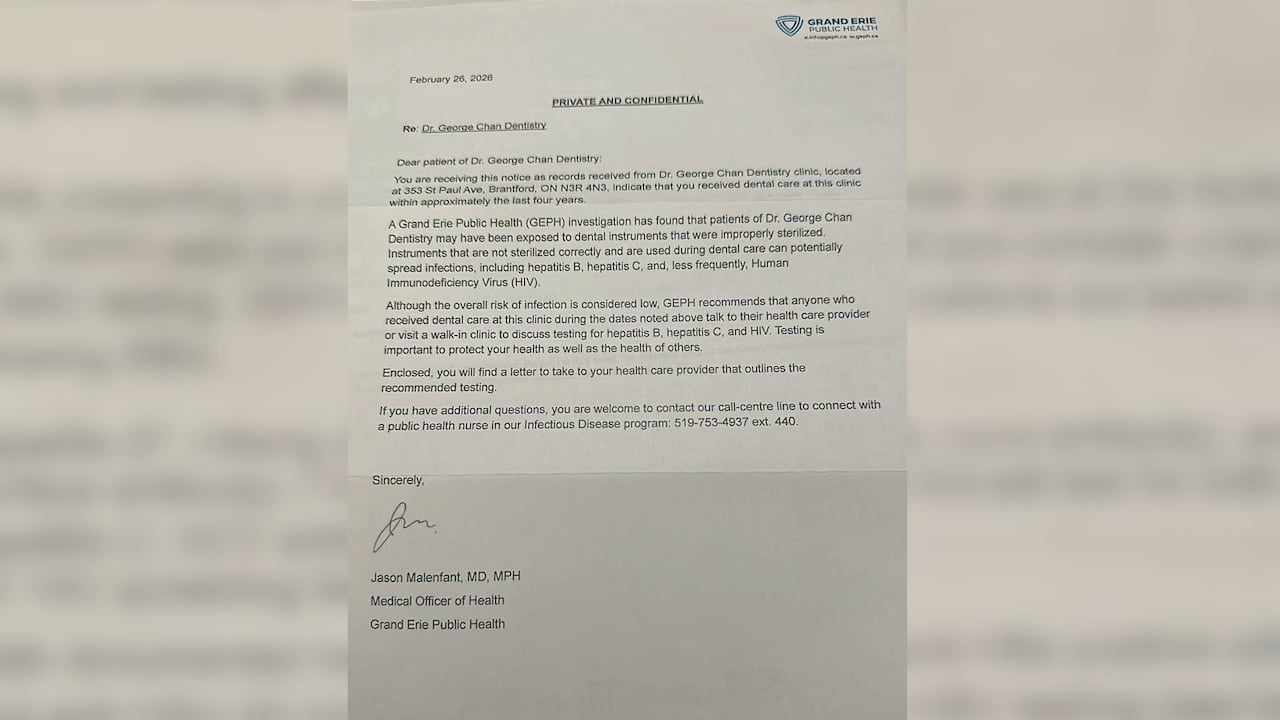
GEPH issued a letter dated Feb. 26 to former patients in mid-March, advising them to undergo testing for the blood-borne infections hepatitis B, hepatitis C, and HIV. (Submitted by Heather Harrington)
According to GEPH’s website, no cases of blood-borne infections have been definitively connected to the dental clinic.
When CBC News inquired whether any former patients had tested positive for hepatitis B, hepatitis C, or HIV after the initial notification was sent, the health unit stated they could not provide specific case details at this moment.
Infection rate remains low
The renewed appeal for testing emphasizes that the overall risk of infection is low, yet screening is crucial to the ongoing investigation.
“Our main goal is to safeguard the health and well-being of our community through a careful and comprehensive investigation. We are urging former patients to take this precautionary measure not only for their own health awareness but also to assist us in gathering the necessary information for any future public health recommendations,” stated Jason Malenfant, GEPH’s medical officer of health, on the health unit’s website.
Public Health Ontario informed CBC News via email that the ongoing investigation evaluates potential risks, including the transmission of hepatitis and HIV, along with possible follow-up actions.
“Testing provides individuals with essential information about their health and can indicate if any care or follow-up is required. Even with a low probability of infection, testing can offer peace of mind,” Public Health Ontario conveyed in an email to CBC News.
The reminder issued on July 7 marks the first public announcement for testing made by GEPH.
In a letter signed by Malenfant, patients were informed that they “may have been exposed to dental instruments that were not properly sterilized. Tools that are not adequately sterilized and used during dental procedures can potentially transmit infections, including hepatitis B, hepatitis C, and, less frequently, HIV.”
An additional letter included with the patient correspondence was directed to health-care providers outlining the recommended testing procedures.
In response to an FOI request from CBC News regarding why letters to patients were only sent in March, despite the investigation occurring in November, the health unit explained that patients were informed following a “thorough investigative process, conducted in line with internal policies and best practices, to ensure decisions were evidence-based, legally sound, and protective of public health.”
Where to get testing
Individuals who visited the Chan clinic during the four-year timeframe specified by GEPH are encouraged to contact their primary-care providers or visit a walk-in clinic to discuss testing options. A GEPH testing requisition form is required.
For those without a primary-care provider, GEPH advises that patients can receive care at the Primary Care Access Clinic by calling 226-388-4725 or by scheduling an appointment with the Virtual Urgent Care Clinic.

