
The closure of the Strait of Hormuz has left ships stranded in the Gulf region, potentially leading to a “super-spreader” incident that could have lasting environmental repercussions, as highlighted in a recent study released last week.
This study, published on July 22 in Biological Invasions, cautions that the algae, barnacles, tunicates, and other marine organisms developing on these inactive vessels in the Persian Gulf and Gulf of Oman could present a “significant global biosecurity risk” once the ships are able to set sail again.
Lead researcher Mario Tamburri, a professor at the University of Maryland Center for Environmental Science, stated, “If you were to design an event to maximize the spread of various species, this would be it.”
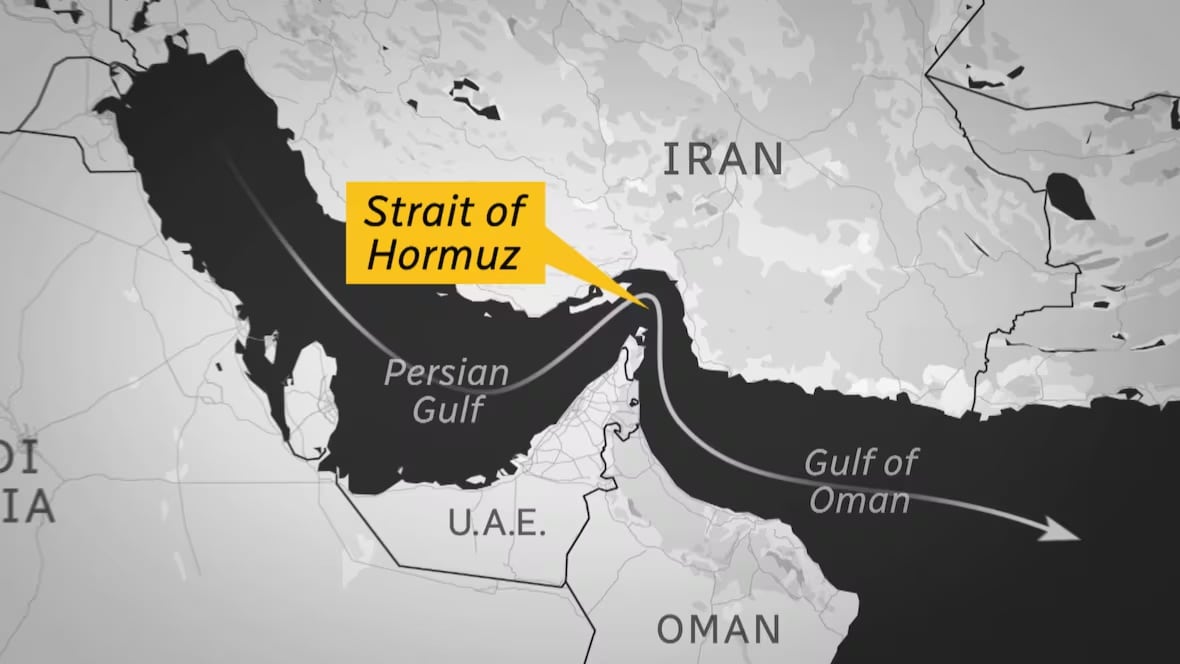
The Strait of Hormuz connects the Persian Gulf with the Gulf of Oman. Researchers estimate that over 1,500 vessels are currently stuck due to the strait’s closure amid the U.S.-Iran conflict. (The National/CBC)
Researchers estimate that around 1,500 ships are currently immobilized in the Persian Gulf, with hundreds more in the Gulf of Oman, as a result of the strait’s closure due to ongoing tensions between the U.S. and Iran.
Biofouling, which refers to the accumulation of organisms on the exterior of ships, could lead to the spread of invasive species to ports globally if not managed correctly, according to the study.
Why the ships may act as ‘super-spreaders’
Tamburri and his team characterize the current situation as a “worst-case scenario.”
Typically, ships are docked for one to three days and may go years without hull cleaning. However, some vessels in the Gulf have remained stationary for at least 40 times longer than usual, the researchers reported.
According to Tamburri, hull coatings intended to prevent biofouling become less effective when ships are inactive for extended periods.
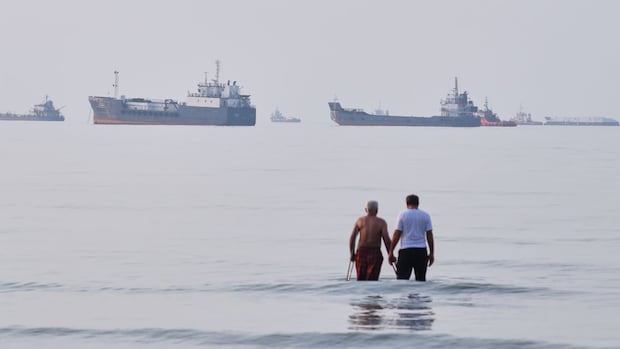
Pascal Larose, vice-president of Desgagnés, a shipping company, has reported that two of their vessels have been stranded in the Strait of Hormuz since the outbreak of hostilities between the U.S., Israel, and Iran. Larose has expressed uncertainty regarding when the ships will be able to finish their journeys.
The combination of the number and size of the vessels, their close quarters, and the timing of the closure heightens the likelihood of a “super-spreader” event, Tamburri noted. Many of these ships became trapped as water temperatures rose, coinciding with the beginning of the growth and reproductive cycles of various organisms.
Species adapted to the high temperatures and salinity of the Persian Gulf might also thrive as invaders in other regions, especially as ocean temperatures continue to increase, Tamburri added.
Cleaning the ships prior to departure presents challenges. Companies specializing in in-water cleaning lack the capacity to service such a high number of vessels in a limited timeframe, he mentioned, and deploying workers into the water amid conflict raises safety concerns.
“Ideally, all vessels would be cleaned before leaving, but most of them will likely have to depart without cleaning,” he remarked.
Ecological issues in shipping
While species can migrate between ecosystems via cargo and ballast water, researchers point out that biofouling has received less attention.
Following the introduction of zebra mussels in the Great Lakes during the mid-1980s, both governmental bodies and the shipping sector began focusing on species transported through ballast water, explained Meghan Mathieson, director of strategy and engagement for ClearSeas, a non-profit group working to enhance awareness about marine shipping.
“There was simply less recognition that organisms could cling to the exterior of a ship and subsequently be released into new ecosystems,” she stated.
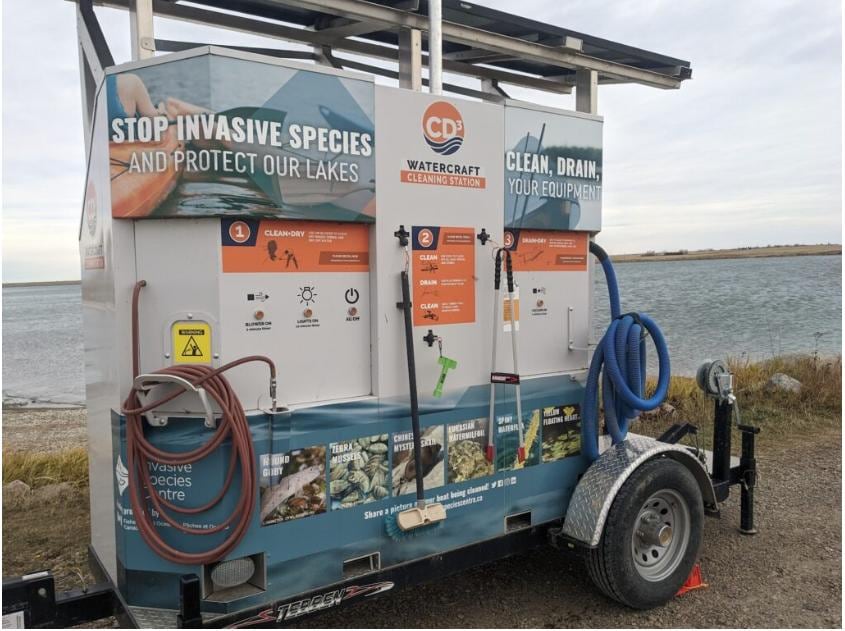
Next spring, the N.W.T. will install a boat washing station similar to this one, as part of an initiative to prevent invasive species like zebra mussels from entering the territory. ( Invasive Species Centre)
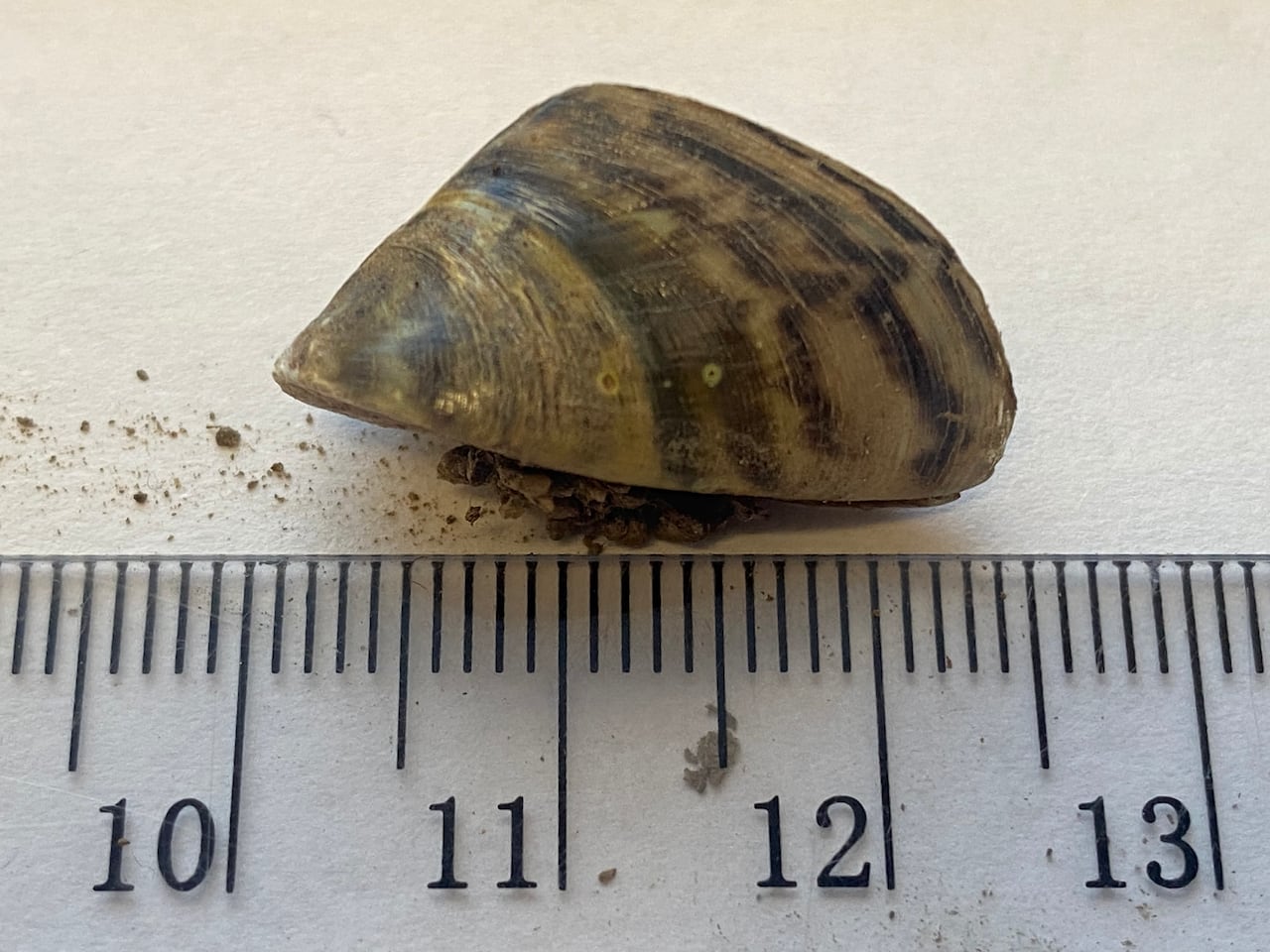
This zebra mussel was one of 19 collected from the Mactaquac Dam by Bruce’s team during last year’s survey of the Saint John River. (Submitted by Meghann Bruce)
Organisms can either detach or release larvae when a vessel arrives at a new port. If they establish themselves, they may outcompete local species.
Tunicates, commonly known as sea squirts, serve as an example. These slimy invertebrates, which spread through biofouling and ballast water, compete with mussels on farming sites along Canada’s East Coast.
The International Marine Organization released an updated set of biofouling guidelines in 2023. According to Mathieson, while there are presently no mandatory regulations, efforts are underway to create them.
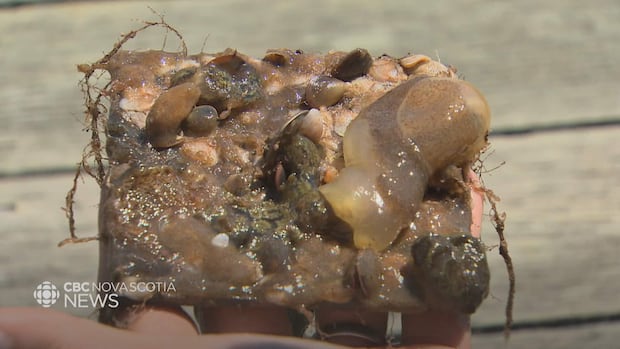
Scientists are monitoring numerous sites in Nova Scotia and southern New Brunswick to determine whether the recent mild winter in Atlantic Canada has accelerated the proliferation of slimy biofouling marine invertebrates. Paul Withers has the report.
Once established, such species are nearly impossible to eradicate, according to Anthony Ricciardi, a biology professor and director of McGill University’s Bieler School of the Environment.
“There are ongoing costs associated with an invasion once it has taken hold,” he noted.
Ecological invasion
Ricciardi likens marine invasions to a hub-and-spoke model: Ships transport organisms to ports, which can then develop into new hubs for further spread.
With so many ships immobilized in the Gulf, he explained, they are likely to gather a “wealth and variety” of organisms, heightening the risk of subsequent invasions in other areas.
This situation illustrates how geopolitical circumstances can have ecological impacts that extend far beyond the immediate area, he argued.
The extent and implications of any potential spread remain uncertain.
“What occurs in the Strait of Hormuz will likely create a lasting legacy that will continue to evolve,” Ricciardi predicted. “It’s necessary to view this not just as an isolated incident, but as a significant shift in the global risk of marine invasions, particularly in regions that can support these specific species.”

