
Whales are perishing in the waters of British Columbia—some are hit by boats, while others struggle to locate food due to the noise created by vessels.
In May, a video showed an individual operating a Sea-Doo colliding with a grey whale near Vancouver, as onlookers gasped in disbelief. Last October, a humpback whale was struck by a boat used for whale watching. A few days later, a deceased whale was found in that same vicinity. Furthermore, a month prior, a humpback whale was hit by a vessel from B.C. Ferries, and another whale was discovered dead the next day.
This trend is becoming increasingly prevalent, and incidents may rise as ferry traffic grows and Canada seeks to transport more goods to Asia through these waters.
In response, two organizations in B.C. are stepping in to assist.
One of these initiatives is a pilot program from Simon Fraser University named HALLO — Humans and Algorithms Listening for Orcas, which seeks to diminish ship noise, enabling the endangered southern resident killer whales to find their food more effectively.
“[The whales] are a vital component of this ecosystem that we want to safeguard,” stated Lauren Laturnus, a master’s student in biology at SFU.
Using specialized surveying equipment, she monitors whale activity in the Salish Sea while also keeping an eye on vessel traffic from East Point on Saturna Island, located between Vancouver Island and the Lower Mainland.
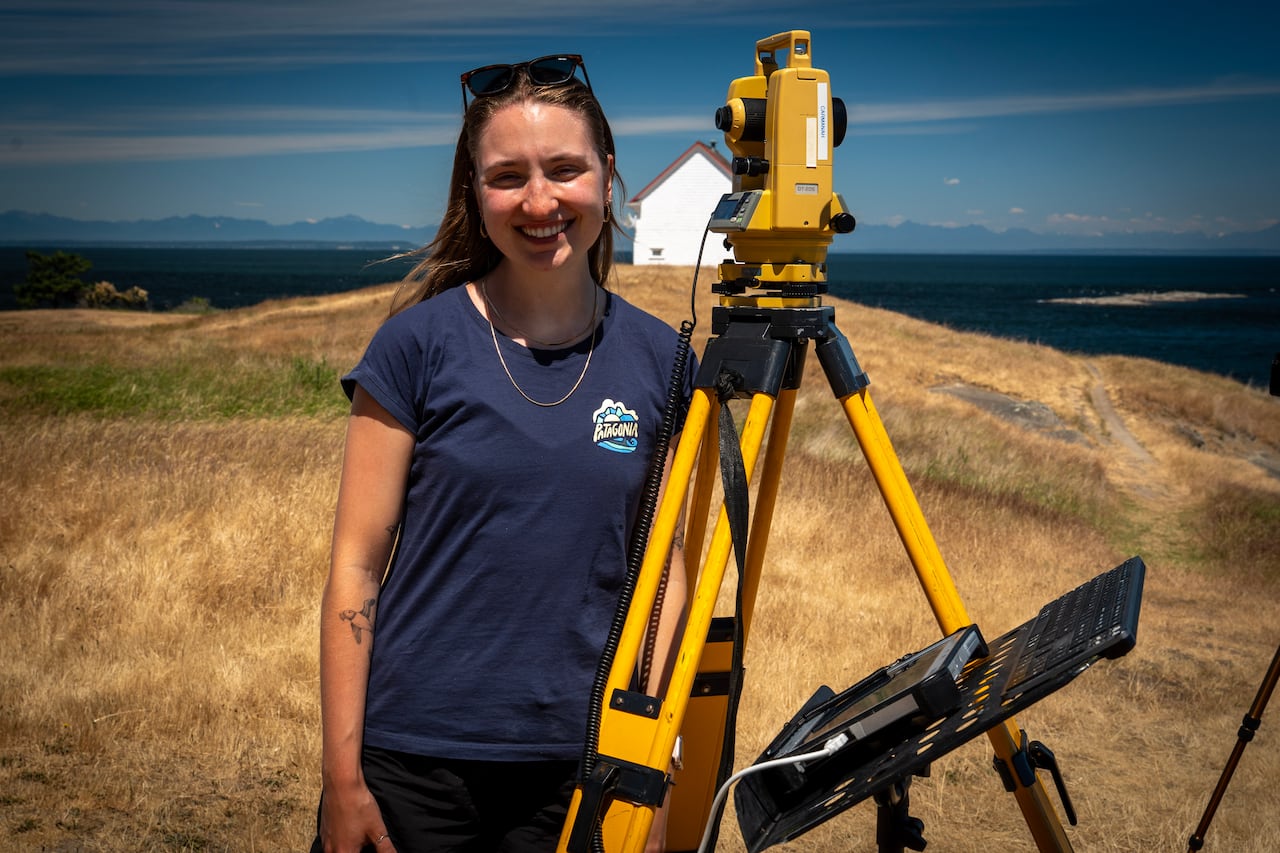
Lauren Laturnus will spend the summer on Saturna Island visually monitoring and logging whales in the Salish Sea, as well as vessel traffic. (Dillon Hodgin/CBC)
“We are trying to determine how frequently they are present simultaneously with these large vessels,” explained Laturnus.
Whenever she spots a whale, she sends a notification to the Ocean Wise Whale Alert System, which alerts commercial sailors in real-time, allowing them to slow down or change their course.
Around 100 citizen scientists have also been trained to observe whale movements around Saturna, Pender, and Mayne Islands and report their findings to the Whale Alert System.
“When a whale is struck, we all feel a bit powerless, and being able to gather information that could help those vessels is quite rewarding,” remarked Maureen Welton.

Maureen Welton, who lives on Saturna Island, is part of a group of citizen scientists who have been trained to monitor whale movements in the Salish Sea and report what they see. (Dillon Hodgin/CBC)
The goal of HALLO is to foster an environment where southern resident killer whales can feed without disturbances.
“They depend on sound to navigate their environment,” Laturnus noted. “The noise from vessels disrupts that process.”
Southern resident orcas represent one of the most critically endangered marine species in Canada, as per the federal government’s Species at Risk Act. According to the Centre for Whale Research, only about 74 of these whales remain in the waters of British Columbia, along with a new calf not included in this count. Their primary food source is the dwindling chinook salmon, mainly found in the Salish Sea, which is one of North America’s busiest shipping routes.
Push for increased protections
HALLO has formed a partnership with the W̱SÁNEĆ Marine Guardians, an Indigenous-led conservation and monitoring initiative in the Salish Sea.
The Marine Guardians assert that by reviving the sacred connection between First Nations and the whales, they can ensure their survival and safeguard ecosystems.
Biologist Rachel Fairfield Checko examines hydrophone data from underwater microphones to identify the whale species detected. This data, combined with the knowledge of First Nations, is utilized to advocate for improved whale protection measures to the federal government.
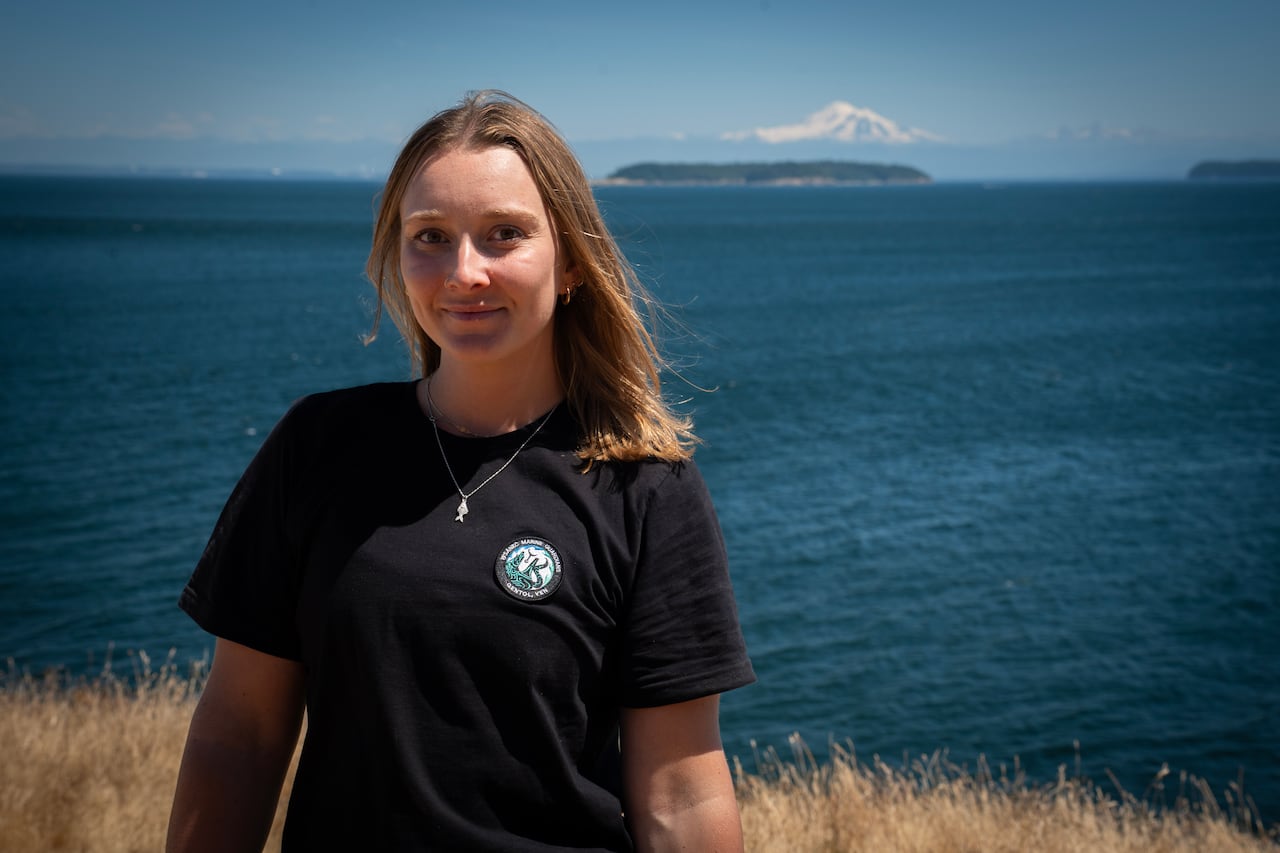
Biologist Rachel Fairfield Checko. (Dillon Hodgin/CBC)
She noted that the W̱SÁNEĆ community successfully advocated for enhanced protections in the Tumbo Channel, situated between Tumbo and Saturna islands, resulting in a voluntary slow down zone from June 1 to November 30, 2026.
“The southern resident killer whales are present year-round, so we have been requesting the Canadian Government to establish these vessel-restricted areas throughout the entire year,” stated Fairfield Checko.
Recently, the Government of Canada expanded the distance vessels must maintain from the southern resident orcas, increasing it from 200 meters to 1000 meters.
Protections for humpbacks also needed, say experts
According to the International Marine Mammal Project, approximately 20,000 whales lose their lives globally due to vessel strikes annually. The report indicates that large whales like humpbacks, greys, blues, and fins are the most frequently affected.
“There’s nothing in their evolutionary background that prepares them for the existence of ships that they need to be cautious about,” explained Andrew Trites, a professor and director at the UBC Marine Mammal Research Unit.
He mentioned that while orcas, seals, and sea lions have managed to coexist with vessels, humpback whales have struggled to do so.

B.C.’s Salish Sea is home to a variety of marine mammals, including the critically endangered southern resident killer whale. For The National, CBC’s Caroline Barghout takes a closer look at the fight to protect marine life in one of North America’s busiest shipping corridors.
Glenn Jones, founder of Reach Technologies Inc., believes he can contribute to the solution.
“We have developed an optical technology capable of identifying virtually any object that breaches the water’s surface,” stated Jones.
The multispectral camera system, which rotates 360 degrees, was originally created for the Canadian Department of National Defence to detect objects that break the water’s surface and prevent hazards to military vessels. Jones has since realized it can also be effective for monitoring whales.
“The primary objective is to automatically spot whales around the vessel along with other points of interest and display them on the chart plotter for the captain to avoid them,” Jones explained.
He claims that the camera can detect whales from 700 to 1,000 meters away, providing ample time for large vessels to reduce speed or alter their course.
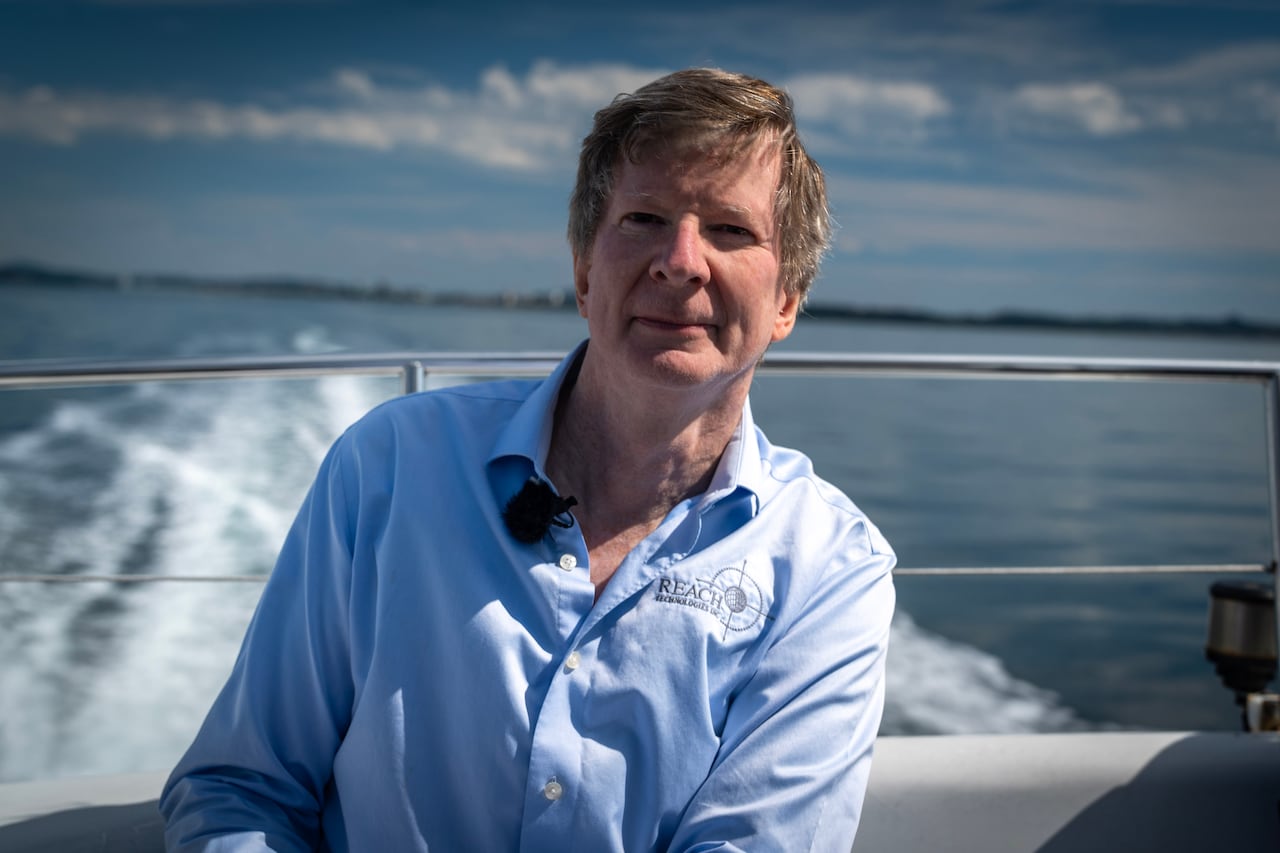
Glenn Jones’ company Reach Technologies originally developed a 360-degree multispectral camera for the Canadian military to detect debris in the water. He has since discovered it also works well for tracking whales. (Dillon Hodgin/CBC)
Jones aspires to implement his technology on commercial ships and ferries to quickly locate whales. Ultimately, he aims to identify heavily trafficked routes so vessels can steer clear.
“Whales are returning in increasing numbers, while ship traffic is also on the rise; we must find ways to coexist and respect each other’s territory.”

